In short
- A Brisbane cold store uses 85–90% of the solar it makes, and the load barely drops in winter, so the self-use share stays high all year.
- Queensland has no state solar rebate. The STC discount does the work, and Brisbane's zone 3 rating makes it worth more than in Melbourne.
- Energex covers Brisbane and the south-east. Export credits are set by retailers, not the government, so size to the load and treat exports as a bonus.
Yes, solar pays for most cold stores in Brisbane, and the numbers here are the ones we use as the reference example across this site. Refrigeration runs all day and the subtropical climate keeps it running through winter, so the share of solar used on site stays high in every month. This page covers what changes for a Brisbane site. The general case, including the overnight load and the battery question, is on solar for cold storage.
| Quick facts | Cold storage solar in Brisbane |
|---|---|
| Distributor | Energex (Brisbane and South East Queensland) |
| STC zone | Zone 3, rating 1.382 |
| State help | No standing rebate for commercial solar |
| Output assumption | about 1,450 kWh per kW a year |
| What to send | one recent bill; we get the interval data from it |
What's different in Brisbane?
1. One distributor, with regional rules beyond it
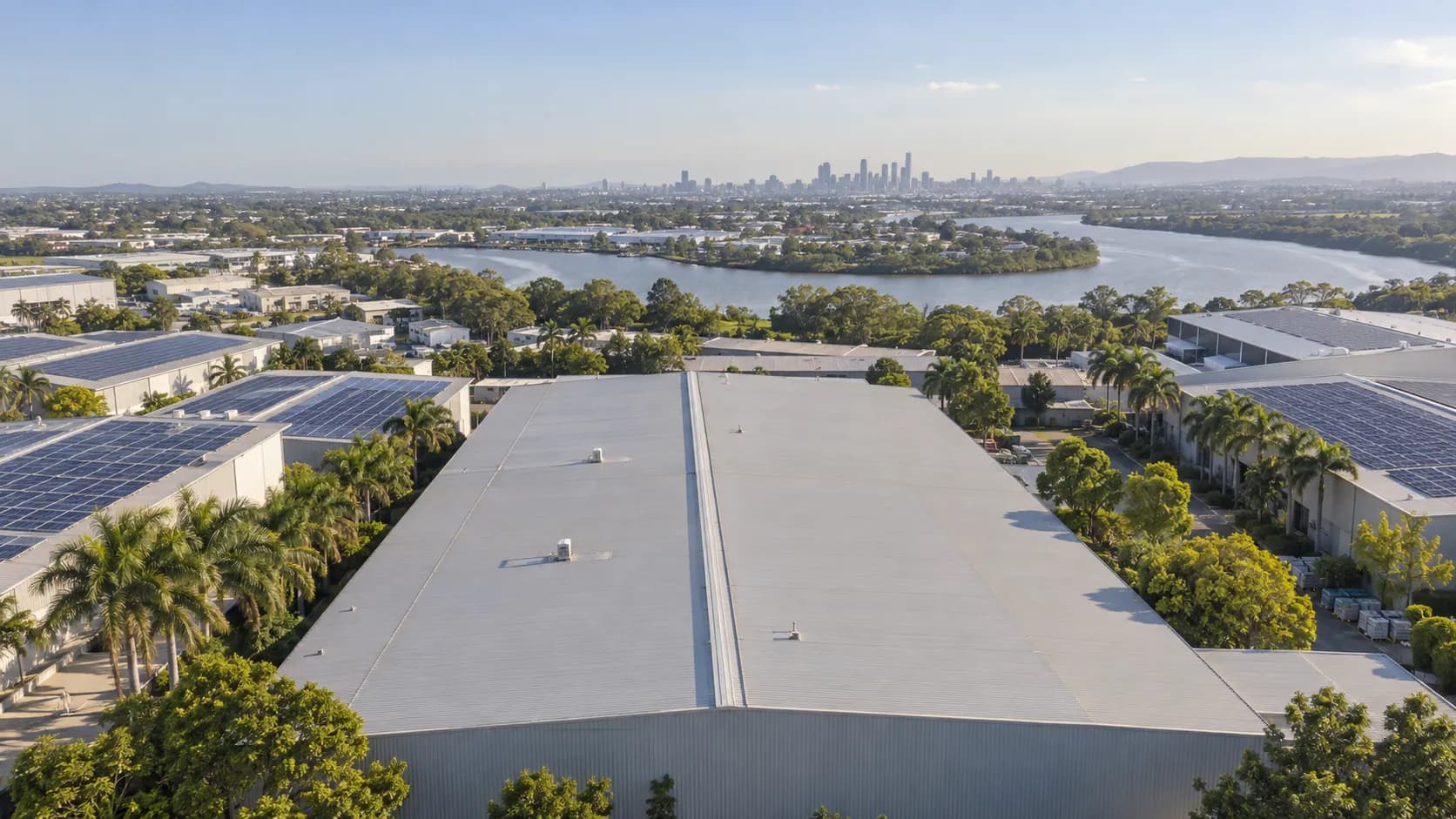
Brisbane's cold-chain belt runs through the south-west and south: Richlands, Wacol, Larapinta, Rocklea and down to Yatala, plus the port-side stores at Hemmant and Lytton. All of it is Energex territory. Ergon Energy takes over in regional Queensland, where the rules differ, so a store in Toowoomba or on the Darling Downs needs checking separately.
- Up to about 30kW: a standard connection under Energex's small embedded generator process.
- Around 100kW: a negotiated connection with an export assessment.
- Above 100kW: negotiated, and an export limit is possible on constrained feeders. A cold store sized to its load exports little, so a cap rarely changes the answer.
The Brisbane commercial solar page has more on Energex connections.
2. STC zone 3
Brisbane postcodes sit in STC zone 3, rating 1.382. For a 2026 install the scheme counts five years, so a 100kW system earns 100 × 1.382 × 5 = 691 certificates, rounded down, about 17% more than the same system in Melbourne. The zone table is on the Clean Energy Regulator's site. Since 1 October 2026 the discount covers eligible systems up to 1MW, which brings the larger distribution centres at Yatala and Larapinta inside the scheme.
3. No state rebate, retailer-set exports
Queensland has no standing rebate for commercial solar; the current list of business rebates is on energy.gov.au. Feed-in credits in South East Queensland are set by retailers rather than the government, so what a cold store earns for its small export depends on the contract. It is usually low enough that the system should be sized to the daytime load first. The Queensland Government's page on market feed-in tariffs in the south-east is the source.
4. Refrigeration that never eases off
Brisbane's summers are hot and humid, and winter days still reach the low twenties, so a cold store's compressors work hard in every month. That keeps the load high through the year, and it is why a Brisbane cold store can use 90% of a well-sized system's output even in July. The flip side, as general knowledge: panel output drops on the hottest afternoons, when a cell can run well above 60°C. A good proposal uses a yield figure that accounts for that rather than a spec-sheet number.
A worked example for a Brisbane cold store
Here is a worked example with made-up figures. These are example figures, not our prices or a real site. The price is the one our commercial solar cost page uses for a 100kW system.
- A 100kW system in Brisbane, assumed to make about 1,450 kWh per kW a year, so about 145,000 kWh a year.
- The cold store uses about 90% of that itself, 130,500 kWh, because refrigeration runs around the clock. 14,500 kWh goes to the grid.
- At $0.28 for each kWh the site no longer buys: 130,500 × $0.28 = $36,540. At $0.05 for exports: 14,500 × $0.05 = $725.
- Yearly saving $37,265. At an example price of $73,000 after the STC discount, that pays back in about 2.0 years.
These are the same assumptions as the cold store example on the cost page and the industry guide, so the three pages can be checked against each other. Brisbane is the reference city for that reason.
What to send
Just one recent electricity bill, every page. Using the meter number on it, we get your interval data, which shows the day and night split, the summer peaks and the demand charge. You don't need to request anything from your retailer.
If you know them, mention the number of compressors, the defrost schedule and whether the roof is insulated panel. Send a bill and an accredited installer prepares a costed proposal sized to how your site uses power. Already have a quote? Compare it line by line with our checklist, starting with the output figure and the export credit it assumes.