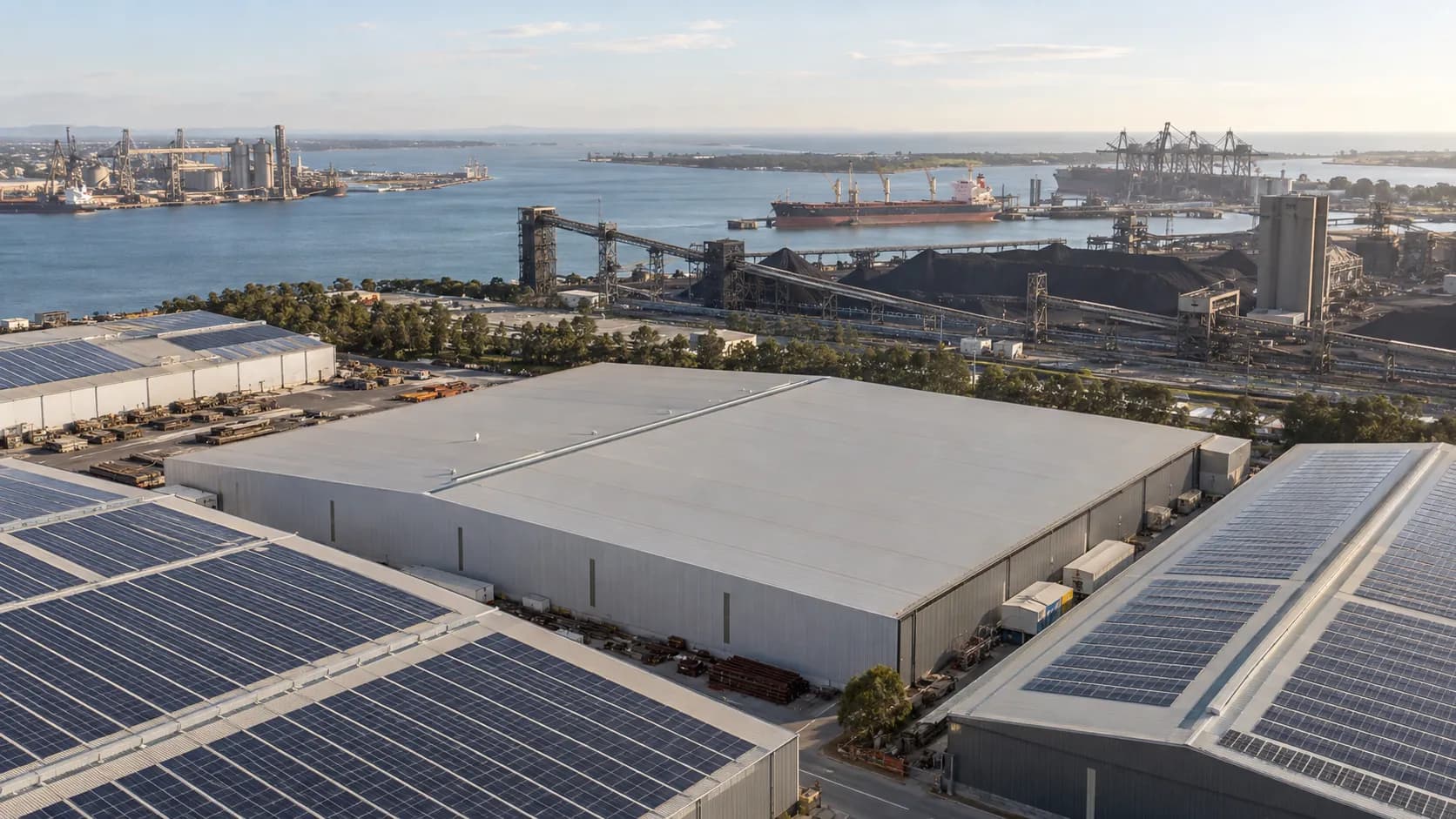
Newcastle · New South Wales
In Newcastle, industrial load that runs all day is what makes solar pay
Most of the city sits on one network, Hunter plant draws power through the daylight hours, and New South Wales pays for demand reduction. Those three facts decide how a system should be sized here.
- Ausgrid
- Network operator in the city
- 1,400 kWh/kW
- Annual yield
- STC Zone 3
- Federal discount zone
- PDRS
- Pays for demand reduction
Incentives
What New South Wales actually offers
There is no New South Wales rebate for commercial solar panels. The federal STC discount is the only up-front reduction, and it comes off the installer's invoice rather than arriving as a payment.
What New South Wales does have is the Peak Demand Reduction Scheme, which pays for capacity that can reduce demand during peak periods. For a Hunter manufacturer with heavy plant and a sharp peak, that can make the storage case worth running alongside the solar one.
This works well in Newcastle
This needs a harder look
Connection
Connecting through Ausgrid
Newcastle, Lake Macquarie and the Hunter Valley, up through Muswellbrook, sit on Ausgrid's network. Essential Energy covers the regions beyond the Hunter. Unlike Sydney, a site anywhere in the Newcastle area deals with one distributor.
Ausgrid sets its own threshold for where a commercial connection moves from a notification to a full application with an export assessment. Larger systems on industrial feeders should expect the assessment, and the timeline that comes with it.
Export limits apply on constrained parts of the network. A system sized to on-site load is rarely troubled by them; one sized to the roof often is, which is one more reason to size from the bill.
Newcastle at a glance
- Network operator
- Ausgrid
- Beyond the Hunter
- Essential Energy
- STC zone
- Zone 3
- Annual yield
- 1,400 kWh per kW
- State rebate
- None for solar
- Demand scheme
- Peak Demand Reduction Scheme
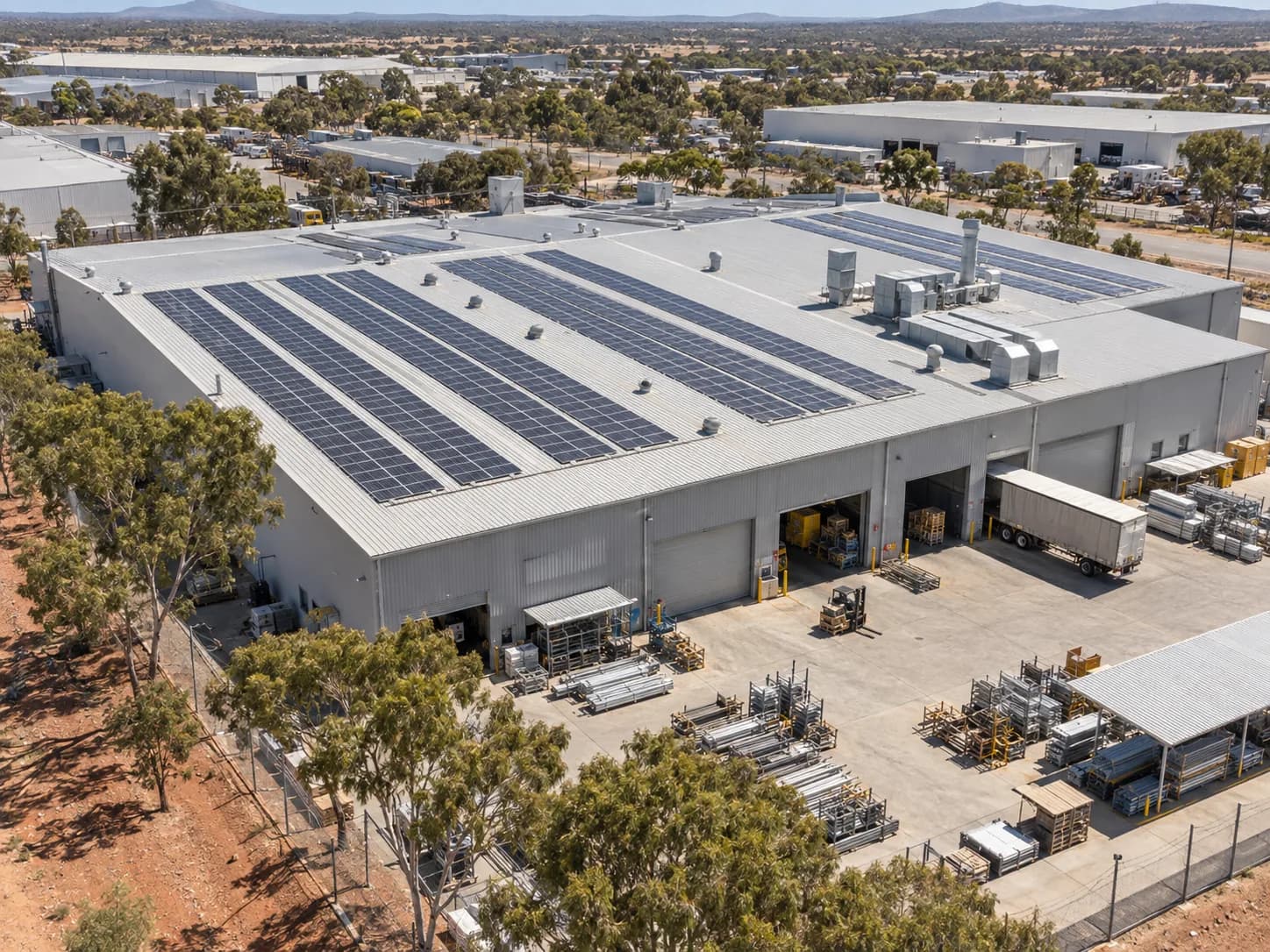
Heavy plant
Demand charges, and where storage comes in
Heavy plant tends to come with a demand charge: a capacity charge set by the site’s highest demand interval in the period, billed separately from the energy used. Solar trims it only when the peak happens to land in daylight.
Where the peak is sharp and predictable, a battery sized to cover it can do what the panels can’t — and in New South Wales the Peak Demand Reduction Scheme can put a value on that capacity too. It is a second decision, made after the solar is sized against the load, not before. The battery page runs through the arithmetic.
The full method is on the cost and payback page, and the installation page covers what happens once a proposal is accepted.
Questions
Newcastle questions
Is there a NSW rebate for commercial solar in Newcastle?
Not for solar panels. The federal STC discount is the only up-front reduction on the system itself. New South Wales does run the Peak Demand Reduction Scheme, which pays for capacity that reduces demand at peak times — a storage and demand-management mechanism rather than a solar one, but one that can matter to a Hunter site with heavy plant.
Which network operates in Newcastle?
Ausgrid, across Newcastle, Lake Macquarie and the Hunter Valley up through Muswellbrook. Essential Energy covers the regions beyond the Hunter. So unlike Sydney, a site in the Newcastle area has one distributor, one set of connection thresholds and one set of export rules.
How much does commercial solar generate in Newcastle?
Around 1,400 kWh per kW of installed capacity a year on a well-oriented roof, similar to Sydney. A 50kW system produces roughly 70,000 kWh annually. What matters more is how much of that the site uses itself, and Hunter industrial sites running day shifts tend to use most of it.
Can solar go on an older industrial roof?
Sometimes not, and it's better to find out early. Asbestos sheeting, a roof within a few years of replacement, or a structure that won't take the extra load are all reasons to stop. A lot of the Hunter's industrial building stock is older, so the roof gets checked before anyone talks about system size.
Send a Newcastle bill, sized to your plant
One recent bill is enough to size a system and price it. It costs nothing, and there's no obligation.
Send your bill