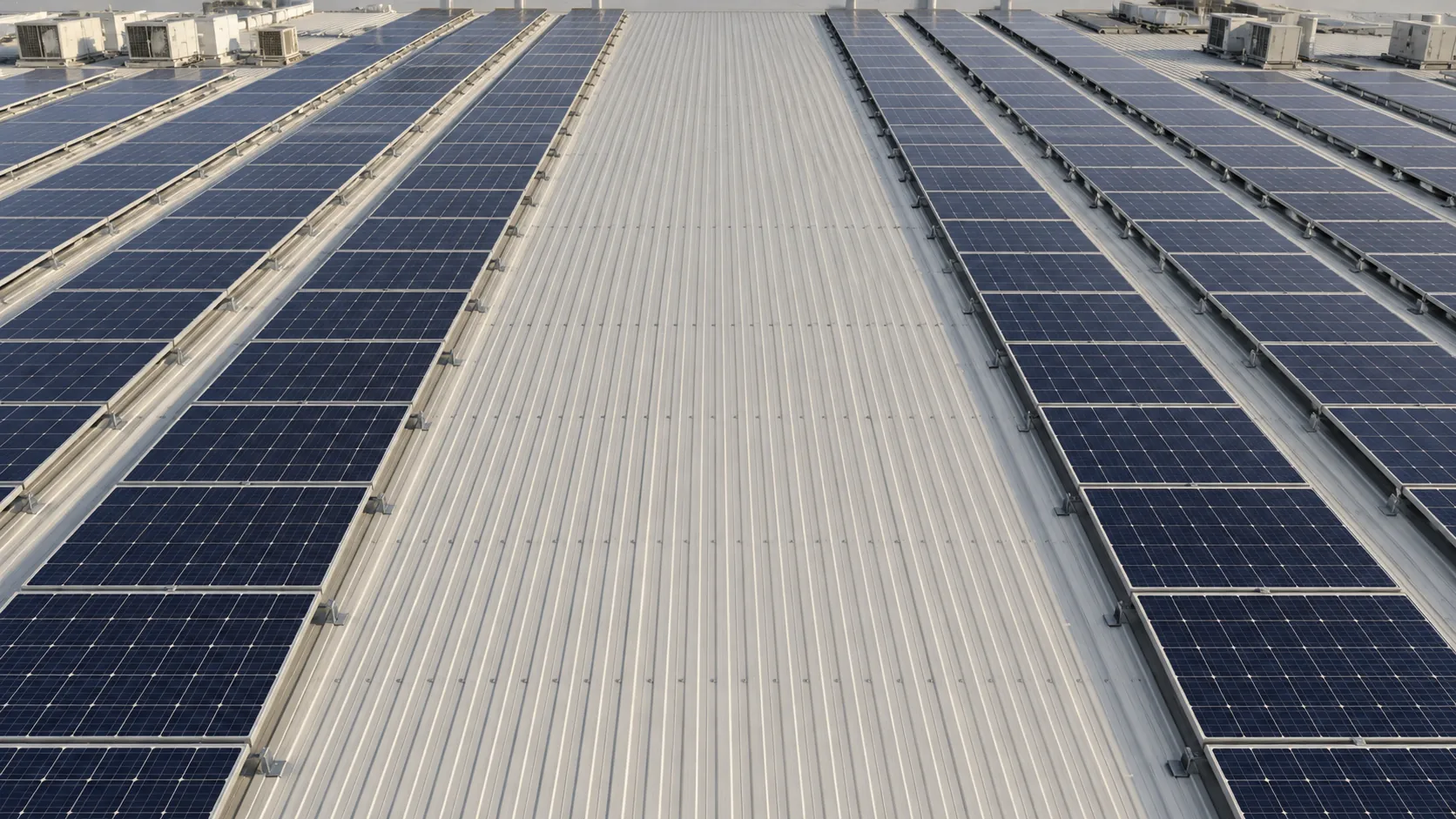
In short
- Solar pays for most clubs and pubs, but less well than for a factory, because a lot of the trade happens after dark.
- The daytime load is bigger than most venues think: cool rooms, kitchens, air conditioning and the gaming floor run from opening time.
- A battery is a demand-charge question first. In NSW the Peak Demand Reduction Scheme discount can change the answer.
Yes, solar usually pays for a club or pub in Australia, with a payback of roughly two and a half to three and a half years on a well-sized system in 2026. The venue trades into the night, so it uses a smaller share of its solar than a day-shift business, but the cool rooms, kitchen and air conditioning run from the moment the doors open. Size the system to that daytime load and the sums work. Oversize it to the roof and they don't.
| Quick facts | Solar for a club or pub |
|---|---|
| Share of solar used on site | about 60–75% on a well-sized system, higher for a venue that opens at 10am |
| Part of the bill solar can cut | the daytime energy, and sometimes the demand charge |
| Part it can't cut | evening trade, overnight refrigeration and the fixed daily charge |
| What to send | one recent bill; we get the interval data from it |
| Battery | tested against the demand charge and, in NSW, the Peak Demand Reduction Scheme discount |
What does a club or pub's power use look like?
A hospitality venue has three loads stacked on top of each other.
- Refrigeration that never stops. Cool rooms, keg rooms, bottle fridges and ice machines run 24 hours. This is the base of the bill, and solar covers it only in daylight.
- A daytime trading load. Air conditioning from opening, the kitchen from lunch service, lighting, the gaming floor, TVs and screens. This is the load solar is for. A registered club that opens at 10am has eight hours of it under the sun.
- An evening peak. Dinner service, a full room, the kitchen and the air conditioning all at once. This sets the demand charge on many venues, and panels make nothing then.
The honest version: solar cuts the first two in daylight and does nothing for the third. That is still a large part of the bill, because the base load and the daytime trade add up to more kWh than the evening peak does.
How much will solar save a club or pub?
Here is a worked example with made-up figures. These are example figures, not our prices or a real venue.
A Brisbane club trades from 10am to midnight, seven days. It puts in a 100kW system, which makes about 145,000 kWh a year at 1,450 kWh per kW.
- The venue uses about 65% of the solar itself, because refrigeration and air conditioning are always running when the panels are. The rest goes to the grid at weekends and in the quiet hours after lunch.
- At $0.28 for each kWh it no longer buys and $0.05 for exports: 94,250 kWh × $0.28 = $26,390, plus 50,750 kWh × $0.05 = $2,538. Yearly saving $28,928.
- At an example price of $73,000 after the STC discount, that pays back in about 2.5 years.
A smaller suburban pub with a 30kW system makes about 43,500 kWh a year. Using 70% itself: 30,450 kWh × $0.28 = $8,526, plus 13,050 kWh × $0.05 = $653, a saving of about $9,180 a year. Against the 30kW range on commercial solar cost of $21,000 to $29,000 after STCs, the payback is about 2.3 to 3.2 years.
The same assumptions give other site types for comparison on commercial solar cost. A club sits behind a cold store or a day-shift factory because it uses less of its own solar, and ahead of an office that closes at five.
Which venues do best?
| Venue | Why |
|---|---|
| Registered clubs that open at 10am | Long daytime trade, big air-conditioned rooms, bowling greens and car parks that can carry ground-mount panels |
| Pubs with a bistro and a bottle shop | Lunch trade and bottle-shop refrigeration give a steady daytime load |
| Hotels and motels with accommodation | Laundry, hot water and housekeeping run through the day. Pool heating is a strong daytime load |
| Evening-only bars and nightclubs | The weakest case. Most of the load lands after sunset, so only the refrigeration base is covered |
Should a club or pub add a battery?
Test it against the demand charge, not against the evening trade. A battery sized to carry a dinner service is large and expensive. A battery that trims the few minutes a night when the kitchen, the air conditioning and a full room peak together can be much smaller and still cut the demand charge every month.
In New South Wales the Peak Demand Reduction Scheme gives businesses an upfront discount on batteries from 20 kWh to 30 MWh, larger when the battery goes in within 90 days of new solar. For a club with sharp evening peaks, that discount can move a battery from no to yes. Ask for the demand-charge saving on its own line in the quote. See commercial solar batteries.
What does each state offer a club or pub?
The federal STC discount applies everywhere and comes off the invoice. Since 1 October 2026 it covers eligible systems up to 1MW, and a system between 100kW and 1MW chooses between STCs and REGO certificates. The states add little for solar itself.
| State | What matters for a club or pub |
|---|---|
| NSW | No rebate on solar panels. The Peak Demand Reduction Scheme battery discount is the one to look at, because evening peaks are the hospitality problem. |
| VIC | Victorian Energy Upgrades gives an upfront discount on business solar systems between 30kW and 200kW through an accredited provider. |
| QLD | No state rebate for commercial solar. Feed-in credits in the south-east are set by retailers, so check your contract before counting on weekend exports. |
| SA | No state government rebate. Some councils, such as the City of Adelaide, run their own. Export value is weak, so size to what the venue uses. |
| WA | No state rebate for business solar. The buyback scheme doesn't cover commercial systems, so the return comes from what the venue uses. |
| ACT | No solar rebate. The Sustainable Business Program co-funds energy efficiency upgrades up to $10,000. Solar isn't a listed item. |
We haven't checked Tasmania or the Northern Territory yet. Full detail and dates are on commercial solar rebates.
What should a club or pub send for a proposal?
Just one recent bill, every page. Using the meter number on it, the team gets your interval data, which shows what the venue draws in every half hour of the year. That is what the system gets sized to. There is nothing to request from your retailer.
If the venue has more than one meter, say a bottle shop on its own supply, send a bill for each.
Questions to ask an installer
- What share of the solar do you expect the venue to use, and is that from our interval data or an assumption?
- What does the system save at our real rate per kWh, not a typical one?
- What does the evening peak do to our demand charge, and what does a battery do to it, on its own line?
- In NSW, has the Peak Demand Reduction Scheme discount been applied to the battery price?
- Where do the panels go, and does the roof over the function room carry them, or the awning over the car park?
Send a bill and an accredited installer prepares a costed proposal sized to how the venue uses power. Already have a quote? Compare it line by line with our checklist.