In short
- A cold chain warehouse uses about 90% of its solar, because refrigeration never stops. In our example a 100kW system pays back in about 2.0 years.
- The roof could carry far more than the load uses. The export limit on your connection and the 1MW STC ceiling decide the size, not the roof.
- Blast freezers and dock doors set the demand charge. That is the battery test, not overnight storage.
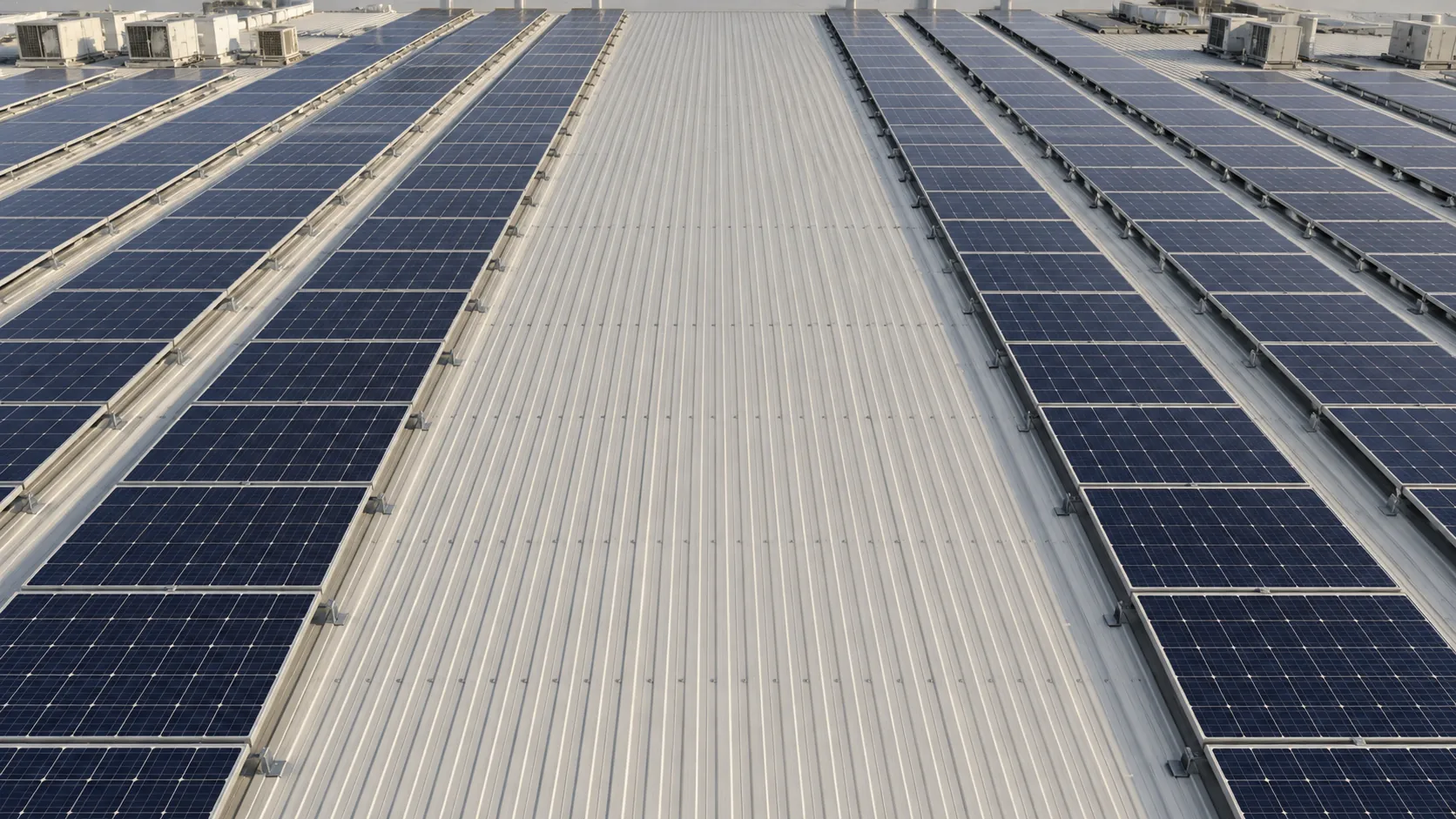
For a cold chain logistics or 3PL warehouse in Australia, solar sizing is a connection question before it is a roof question. The roof of a 20,000 m² temperature-controlled distribution centre could carry well over 1MW of panels. The site's daytime refrigeration load might use 500kW of it, the network might allow only part of the rest to be exported, and the STC discount stops at 1MW. This page goes deeper than our cold storage guide on the loads that make a cold chain warehouse different, the size that fits, and what to ask before a large system is quoted.
| Quick facts | Solar for a cold chain warehouse |
|---|---|
| Typical size | 250kW to 1MW, set by export limit and the 1MW STC ceiling |
| Share of solar used on site | about 90% on a well-sized system in our example |
| Payback in our example | about 2.0 years at 100kW |
| What sets the demand charge | blast freezer cycles, defrost, dock doors open on a hot afternoon |
| What to send | one recent bill per meter; we get the interval data from it |
What makes a cold chain warehouse's load different?
A cold store holds product at temperature. A cold chain warehouse moves it, and the movement adds load on top of the refrigeration baseline.
- Blast freezing and tempering. Pulling pallets from chilled to frozen, or the reverse, runs compressors at full load for hours. It is scheduled, which means it can sometimes be timed.
- Dock doors. Every time a refrigerated dock opens on a 35°C afternoon, warm air pours in and the refrigeration works to recover. Peak receiving and dispatch windows, often early morning and mid afternoon, show up as spikes in the interval data.
- Defrost cycles. Evaporator coils defrost on a schedule. Several coils defrosting together set a short, sharp peak.
- Material handling. Forklift and reach truck charging, conveyors and automated storage. Charging usually runs at shift change or overnight, and can be moved.
The result is a high baseline that never stops, with spikes that follow the truck schedule. Solar covers the baseline in daylight well. The spikes decide the demand charge, and that is a separate problem.
What's a realistic payback on a cold chain warehouse?
Here is a worked example with made-up figures. These are example figures, not our prices or a real site.
A Brisbane cold chain warehouse puts in a 100kW system, which makes about 145,000 kWh a year. It uses about 90% on site. Each kWh used saves $0.28; each kWh exported earns $0.05. The example price is $73,000 after the STC discount.
- 130,500 kWh × $0.28 = $36,540, plus 14,500 kWh × $0.05 = $725. Yearly saving $37,265.
- $73,000 ÷ $37,265 = about 2.0 years to pay back.
That is the cold store row on the cost page's payback table. On a large warehouse 100kW is a starting point, not the answer. The cold storage guide shows what happens as the system grows past the daytime load: the second 100kW earns less than half what the first does, because more of it is exported. On a cold chain site with a high baseline, that crossover sits much higher, often at several hundred kW.
How big should the system be?
Work through four limits in order. The smallest one wins.
- The daytime load. From your interval data: the average load between 9am and 3pm on a typical day. Midday output above this is exported at $0.05. On a site drawing 500 kW through the day, that limit sits around 500kW to 600kW of panels.
- The export limit. Networks limit how much a large system can send back, and on some feeders the agreed export is zero. A zero-export site must size to the load, or fit export control that throttles the inverter.
- The 1MW STC ceiling. Since 1 October 2026 a system up to 1MW takes the upfront STC discount. The limit counts all solar on the site. Above 1MW the project moves to large-scale certificates, with far more administration. See how STCs work for business and the 1MW change.
- The roof and the switchboard. A 500kW system needs about 2,500 to 3,100 m² and 900 panels; 1MW needs 5,000 to 6,200 m² and 1,800 panels, on the cost page's planning figures. The roof on a distribution centre usually clears that. The main switchboard and the transformer often do not without work, and that work belongs in the quote, priced, not "subject to inspection".
A 20,000 m² roof on a site with a 400 kW daytime load and a tight export limit might end up with a 400kW system. That is the right answer, and a quote for 1MW on the same site is the wrong one.
Multiple tenancies and multiple meters
A 3PL site often has more than one meter: a landlord's supply for common areas and the chiller plant, and tenants' supplies for their own halls. Solar on the landlord's roof can only offset the meter it is connected to. Where the refrigeration plant sits on one meter and the warehouse halls on another, the system is sized to the plant's meter, and a second system or an embedded network is a separate decision. Send one bill for each meter, and say which roof sits over which.
Does solar help with the demand charge, and does a battery?
Solar can lower a peak that falls mid afternoon on a hot day when dock doors and refrigeration both run hard, because output is high at that hour. It does nothing for a defrost peak at 5am or a blast freezer started at 8pm. The honest battery test is the demand charge, not overnight storage: a warehouse using 90% of its solar has almost nothing spare to store. A battery sized to trim a defrost or dock peak can pay where overnight storage never will. New South Wales gives an upfront discount on business batteries through the Peak Demand Reduction Scheme, larger when new solar goes in within 90 days. See commercial solar batteries and demand charges explained.
What does each state add?
The federal STC discount is the main support everywhere, and from 1 October 2026 it reaches 1MW. Victoria's Victorian Energy Upgrades covers 30kW to 200kW through an accredited provider, with project-based activities above that. New South Wales adds the battery discount. The full state table is on the cold storage guide.
What should a cold chain warehouse send for a proposal?
Just one recent electricity bill for each meter, every page. Using the meter number on each, our team gets your interval data, which shows the refrigeration baseline, the daytime load the system should be sized to, the blast and defrost cycles, and the half-hour that sets your demand charge. There is nothing to request from your retailer.
Already have a quote, perhaps for the whole roof? Compare it line by line with our checklist. Otherwise send the bill.
What should a cold chain operator ask an installer?
- What daytime load is the system sized to, from our interval data, and where does midday output exceed it?
- What export limit has the network agreed or indicated, and is export control included?
- Does the 1MW total include the system already on the roof?
- Which meter is the system connected to, and does the saving only count that meter's load?
- What is priced for the switchboard, transformer, protection and structural work?
- Is the demand charge saving on its own line, by month?