In short
- A dairy's two biggest loads, milking and vat cooling, fall before sunrise and from mid-afternoon. Solar makes most of its power in between.
- Size the system to the midday load, not the shed roof. A smaller system used on site beats a big one that exports for a few cents.
- Two cheap changes lift the return: heat water in the middle of the day, and run the vat's pre-cooling when the sun is up.
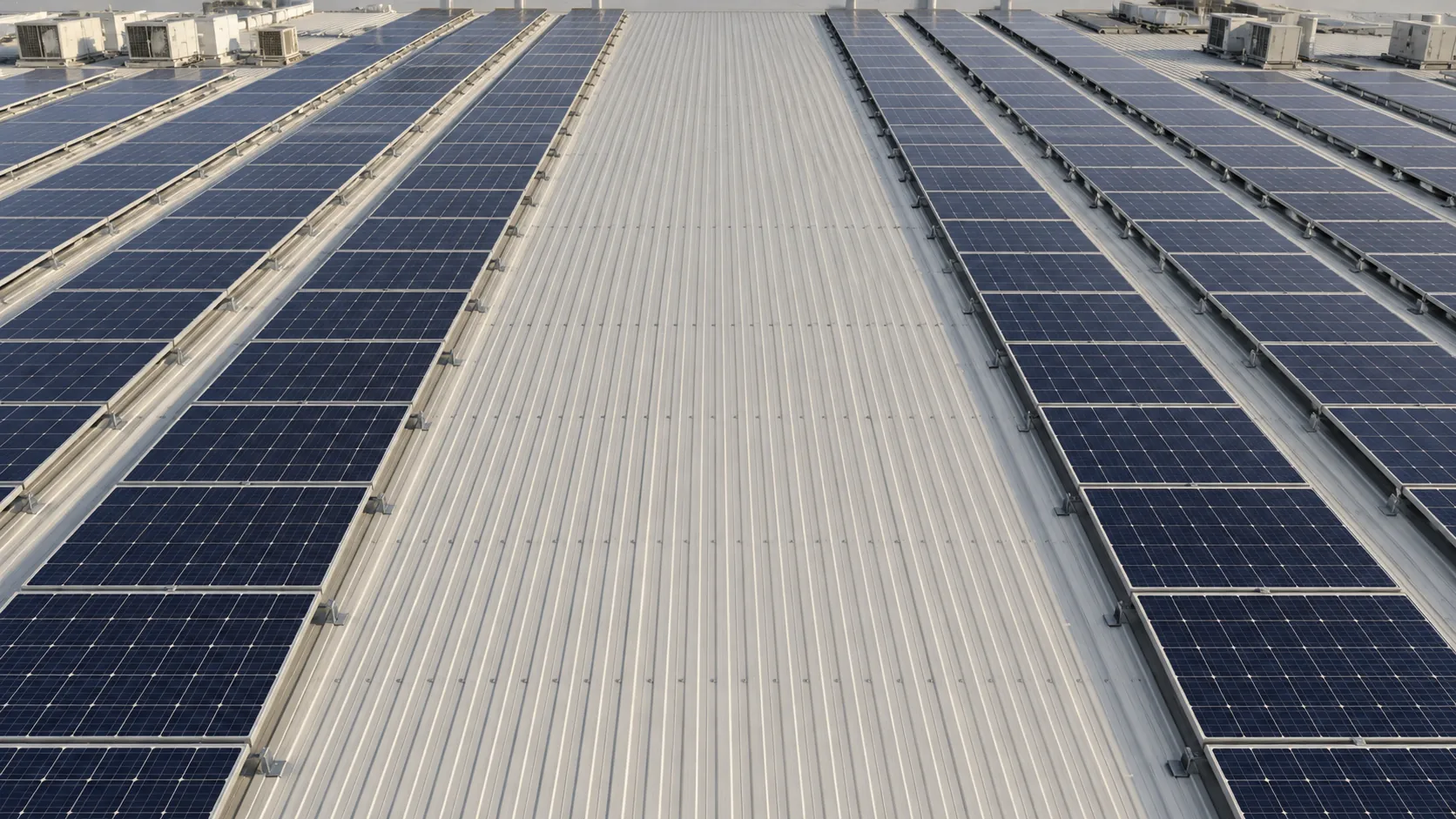
Solar saves a dairy farm money in 2026, but a dairy needs a smaller, better-timed system than its roof could hold. Milking starts around 5am and again around 3pm, and the vat compressor and hot water run hardest straight after each. Midday, when the panels peak, the shed is mostly idle apart from the vat holding temperature and the plate cooler. A system sized to the roof exports most of its output, and on a rural line it may not be allowed to export at all. This page goes deeper than our farms guide on the dairy problem and what fixes it.
| Quick facts | Solar for a dairy |
|---|---|
| Share of solar used on site | 40–50% for a roof-sized system; 75–85% for one sized to the midday load |
| Loads that suit solar | vat holding, plate cooler, yard and effluent pumps, water heating moved to midday |
| Loads it can't reach | the 5am milking and the first vat pull-down after each milking |
| What usually sets the size | the midday draw on the dairy meter, then the export limit on the line |
| What to send | one recent bill for the dairy meter; we get the interval data from it |
Where a dairy's power goes, hour by hour
A typical dairy shed has four loads, and only some of them overlap with solar.
- Milking plant. Vacuum pump, milk pump, cup washers and lighting. Runs for two to three hours from about 5am and again from about 3pm. Almost none of the morning session sees any sun; the afternoon session catches the tail of it.
- Vat cooling. The compressor works hardest as warm milk comes in, so straight after each milking. Between milkings it cycles to hold temperature, and that steady midday cycling is the load solar reaches.
- Hot water. Plant and vat washing need water at 80°C or more, usually heated overnight on a cheap tariff. This is the biggest load that can be moved into solar hours.
- Pumps and the yard. Plate cooler water, effluent and yard wash-down pumps, stock water, feed pad. Daytime loads, a good fit.
Put together, a dairy on a roof-sized system typically uses 40 to 50% of what the panels make. The rest exports for a small credit, or, on a single-wire or long rural feeder, is curtailed.
Three ways to make solar pay on a dairy
- Size to the midday load. Look at the dairy meter's interval data between 10am and 3pm. The system that covers that draw, with a little over, uses most of its own output. Every kW above it mostly exports.
- Move the hot water. Put the hot water system on a timer or a diverter so it heats from late morning. Depending on the plant, that can move 10 to 15% of the shed's daily load into solar hours and lift self-use on a mid-sized system past 60%. Check the washing times still get water at temperature.
- Pre-cool and ice-bank in daylight. A plate cooler fed from a chilled water or ice-bank tank that is charged through the day takes the hardest part of the afternoon pull-down off the compressor. Not every shed has one; where it does, run it on solar.
A battery is the fourth option. It can carry solar into the afternoon milking, but it has to beat the price in the quote and the demand charge, not just the exported kWh. See commercial solar batteries for how to test it.
How much will solar save a dairy?
Here is a worked example with made-up figures. These are example figures, not our prices or a real site. The 100kW price, output and rates are the ones used on our commercial solar cost page, so the pages can be checked against each other. The 30kW price sits in the middle of the cost page's $21,000 to $29,000 range after STCs.
A Victorian dairy milks 400 cows twice a day. The shed roof could hold 100kW.
Option A: 100kW sized to the roof. About 145,000 kWh a year at an example price of $73,000 after the STC discount. The dairy uses about 45%.
- 65,250 kWh × $0.28 = $18,270, plus 79,750 kWh × $0.05 = $3,988. Yearly saving $22,258.
- Payback about 3.3 years. If the line can't export, the $3,988 disappears and it stretches to about 4 years.
Option B: 100kW with the hot water moved to midday. Same system, self-use rises to about 55%.
- 79,750 kWh × $0.28 = $22,330, plus 65,250 kWh × $0.05 = $3,263. Yearly saving $25,593.
- Payback about 2.9 years. A timer did that.
Option C: 30kW sized to the midday load. About 43,500 kWh a year at an example price of $25,000 after STCs. With the hot water shifted, the dairy uses about 80%.
- 34,800 kWh × $0.28 = $9,744, plus 8,700 kWh × $0.05 = $435. Yearly saving $10,179.
- Payback about 2.5 years, and it fits inside most rural export limits without a fight.
Option C pays back fastest per dollar; Option B saves the most money a year. Which is right depends on the export limit on your line and how much capital you want on the roof. The proposal should show you both, with the sums.
What the states add for a dairy
The federal STC discount applies everywhere, on each meter, up to 1MW a site since 1 October 2026. For a dairy the state detail that matters is below; the full table is on our farms guide.
| State | What matters for a dairy |
|---|---|
| VIC | Victorian Energy Upgrades gives an upfront discount on business systems from 30kW to 200kW through an accredited provider. Most of Australia's dairies are here, so ask every quote to show the VEU line. |
| NSW | No discount on panels. The Peak Demand Reduction Scheme discounts batteries from 20 kWh, larger when new solar goes in within 90 days. Relevant where the line can't export. |
| TAS | We haven't checked Tasmania's position yet. |
What should a dairy send for a proposal?
Just one recent bill for the dairy meter, every page. Using the NMI on it, the team gets the meter's interval data, which shows exactly when the plant, vat and hot water draw. You don't need to request anything. If the house or an irrigation pump is on its own meter, send that bill too and each gets its own sums.
Mention these in the form if you know them: milking times, herd size, how the hot water is heated and when, whether there's an ice bank or chilled water tank, and whether the shed roof or a ground site is the likely spot.
What to ask your installer
- Which hours of our interval data did you size the system to, and what self-use share does the proposal assume?
- Have you costed moving the hot water to midday, and shown the saving with and without it?
- What export limit have you assumed for our line, and have you confirmed it with the network?
- If the line is zero-export, what does the system do at midday when the vat is idle?
- Show the 30kW and 100kW options side by side, with payback per dollar.
Already have a dairy quote? compare it line by line with our checklist, starting with these points. Otherwise send a bill and an accredited installer prepares a costed proposal sized to how your dairy actually runs. Free, no obligation.