In short
- An irrigation pump is the best solar load on most farms: large, in daylight, and usually on its own meter.
- The catch is the off season. The panels make the same power when the pump is off, and on a rural line that power may export for little or be curtailed.
- Do the sums on the pump meter's own bill. Pump tariffs are often lower than the general business rate, and that changes the payback.
Solar on an irrigation pump meter pays back well in Australia in 2026, as long as the proposal is honest about the months the pump doesn't run. In season a pump draws through the day and uses nearly everything a well-sized system makes. Out of season the same system exports, and on a long feeder the network may cap or refuse exports. The size that makes sense sits between the in-season load and the export limit, and the rate on the pump tariff decides whether it is 2.9 years or closer to 4. This page goes deeper than our farms guide on the pump meter alone.
| Quick facts | Solar on an irrigation pump meter |
|---|---|
| Share of solar used on site | 90% or more in season; 50–60% across the year on a six-month season |
| What sets the size | the pump's daytime draw in season, capped by the feeder export limit |
| What sets the payback | the rate on the pump tariff, which is often lower than the business rate |
| Where the panels go | usually a ground mount beside the pump shed, close to the meter |
| What to send | one recent bill for the pump meter; we get the interval data from it |
Why the pump meter is different
Three things set an irrigation meter apart from the rest of the farm.
- It runs in daylight. Most centre pivots, lateral moves and flood pumps run through the day in season, often on a schedule the irrigator controls. That is the load solar wants.
- It is seasonal. A summer cropping or pasture pump might run hard from October to March and barely at all from April to September. Solar output is highest in those same summer months, which helps, but the winter output still has to go somewhere.
- It is often on its own tariff. Many pump meters are on a controlled or irrigation tariff with a lower rate per kWh than the general business rate. A lower rate means each kWh the solar replaces is worth less, so the payback is longer than the headline figures suggest.
Because the pump meter is separate, the sums are done for it alone. The STC discount applies on that meter in its own right, up to 1MW a site since 1 October 2026.
The export limit sets the ceiling
A pump shed is usually at the end of a long rural feeder, sometimes a single-wire earth return line. Networks limit exports on these lines to keep voltage within range, and the limit per connection can be small or zero.
That ceiling matters most out of season. In season, little exports anyway. Out of season, everything exports, so if the limit is zero the panels are curtailed for six months. The right size is the one that uses most of its output in season and loses as little as possible out of it. The proposal should state the limit it assumes, show in-season and off-season self-use separately, and say what the inverter does when the limit is hit.
Several meters means several decisions. A farm with a pump meter, a shed meter and a house meter often does better with a system on each, each sized to its own daytime load and limit, than with one large system on the pump.
How much will solar save on an irrigation pump?
Here is a worked example with made-up figures. These are example figures, not our prices or a real site. The system, price, output and rates are the ones used on our commercial solar cost page, so the pages can be checked against each other.
A Riverina farm puts a 100kW ground-mounted system beside the pump shed. It makes about 145,000 kWh a year at an example price of $73,000 after the STC discount. The pump runs October to March in daylight.
Case A: business rate, exports allowed. In season the pump uses nearly all the output; out of season it exports. Across the year the meter uses about 55% of the solar.
- 79,750 kWh × $0.28 = $22,330, plus 65,250 kWh × $0.05 = $3,263. Yearly saving $25,593.
- Payback about 2.9 years.
Case B: business rate, zero export. Same system, but the feeder can't take exports. The off-season 45% is curtailed.
- 79,750 kWh × $0.28 = $22,330. Yearly saving $22,330.
- Payback about 3.3 years.
Case C: pump tariff at $0.20 a kWh, exports allowed. The pump meter is on a lower rate, as many are.
- 79,750 kWh × $0.20 = $15,950, plus 65,250 kWh × $0.05 = $3,263. Yearly saving $19,213.
- Payback about 3.8 years.
Same panels, same pump. The rate on the bill moved the payback by almost a year, and the export limit by half a year. A quote that uses the general business rate on a pump meter is quietly overstating the saving. Check the rate on your pump bill before you compare anything, or run the quote through our comparison checklist.
Ground mount by the pump shed
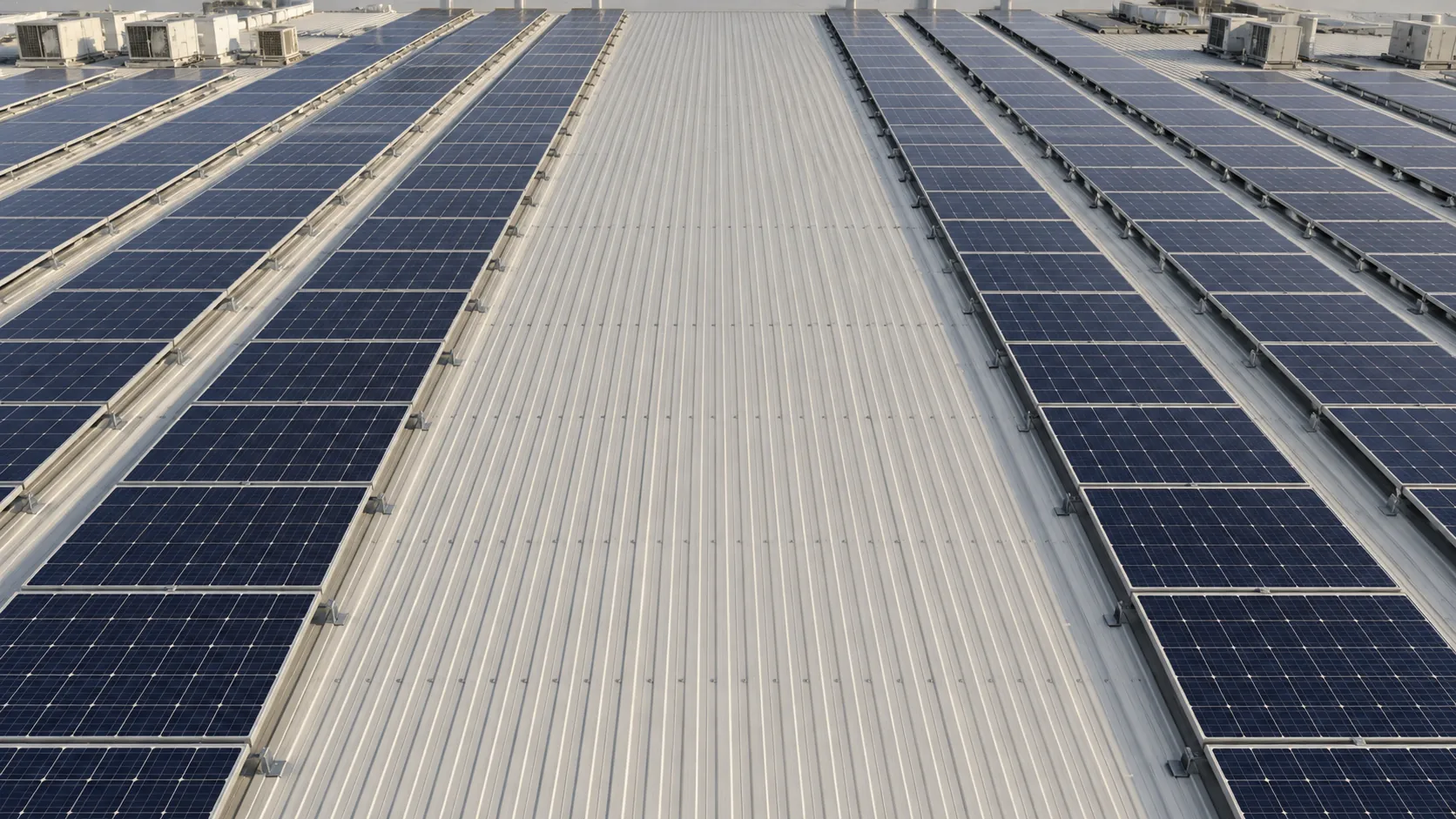
Pump sheds rarely have much roof, so irrigation systems are usually ground mounted. A ground array can face north at the ideal tilt and sits close to the meter, which keeps the cable run short; a long run back to a distant shed roof loses power and costs money in trenching. It needs frames and footings, so it costs more per kW than a roof system, and it needs fencing where stock graze. Dust from tracks and spray drift cut output, so ask how often the panels need cleaning and whether that's priced in.
Diesel pumps are a separate question. Solar can't run a diesel, but where a farm is weighing up an electric conversion, the solar sums belong in that decision.
What should an irrigator send for a proposal?
Just one recent bill for the pump meter, every page. Using the NMI on it, the team gets the meter's interval data, which shows the pump's hours, its draw and its season. You don't need to request anything. Send a bill for each other meter you want quoted and each gets its own sums.
Mention these in the form if you know them: the irrigation season and typical hours a day, the pump size in kW, whether it's on a pump or controlled tariff, how far the pump shed is from the meter, and whether a ground site is available.
What to ask your installer
- What export limit have you assumed on this feeder, and have you confirmed it with the network?
- Have you shown in-season and off-season self-use separately, or one annual figure?
- Which rate did you use for the saving: the pump tariff on our bill, or a general business rate?
- What does the inverter do when the export limit is reached, and how much output does that lose out of season?
- Ground mount or roof: what does each cost per kW here, and who fences the array?
Send the pump meter's bill and an accredited installer prepares a costed proposal for that meter, sized to the season and the line. Free, no obligation.