In short
- Sheds run fans, cooling pads and heating day and night, and the load climbs on hot afternoons, when solar peaks. A well-sized system is used almost entirely on site.
- Long, low shed roofs usually hold more panels than the load needs. Size to the shed meter's daytime draw, not the roof.
- Solar doesn't replace the standby generator. Ventilation has to survive a blackout, and panels alone don't do that.
Solar suits a poultry shed or piggery better than most farm loads in Australia in 2026, because the load never stops and rises with the heat. Tunnel ventilation fans, cooling pads, feed augers, lighting and heating run around the clock, and on a 38°C afternoon the fans and pads work hardest at the exact hour the panels make the most. A system sized to the shed's daytime draw uses 85% or more of its own output, which puts it alongside a cold store for return per kW. This page goes deeper than our farms guide on intensive sheds.
| Quick facts | Solar for a poultry shed or piggery |
|---|---|
| Share of solar used on site | often 85–90% on a system sized to the shed load |
| Loads that suit solar | tunnel fans, cooling pads, feed and water systems, lighting, daytime heating |
| Loads it can't reach | the overnight fan and heater load, which stays on the bill |
| What usually sets the size | the daytime draw across the sheds on each meter, then the export limit |
| What to send | one recent bill per meter; we get the interval data from it |
How a shed uses power through the day and the year
A broiler or layer shed and a grower or farrowing piggery share a shape: a base load that never switches off, and a weather-driven peak on top.
- Ventilation. Tunnel and minimum-ventilation fans run continuously. On hot days every fan in the bank runs, and the cooling pad pumps join them. This peak lands between noon and 5pm in summer, which is where solar is strongest.
- Heating. Brooding in poultry and farrowing in pigs need heat, often gas but increasingly electric. Heating peaks at night and in winter, when solar makes least. Electric heating lifts the overnight load solar can't touch.
- Feed, water and lighting. Augers, pumps and lights run on programs through the day. Modest, steady, well matched to solar.
- Batch cycles. A broiler shed's load climbs through the batch as birds grow and heat builds, then drops to nothing in the clean-out week. Across a year the average is what matters, and interval data captures it.
Because the base load is there every hour of daylight, little solar goes to waste. What solar cannot do is reduce the overnight fan and heater load, and that decides the sensible size.
Sizing across several sheds
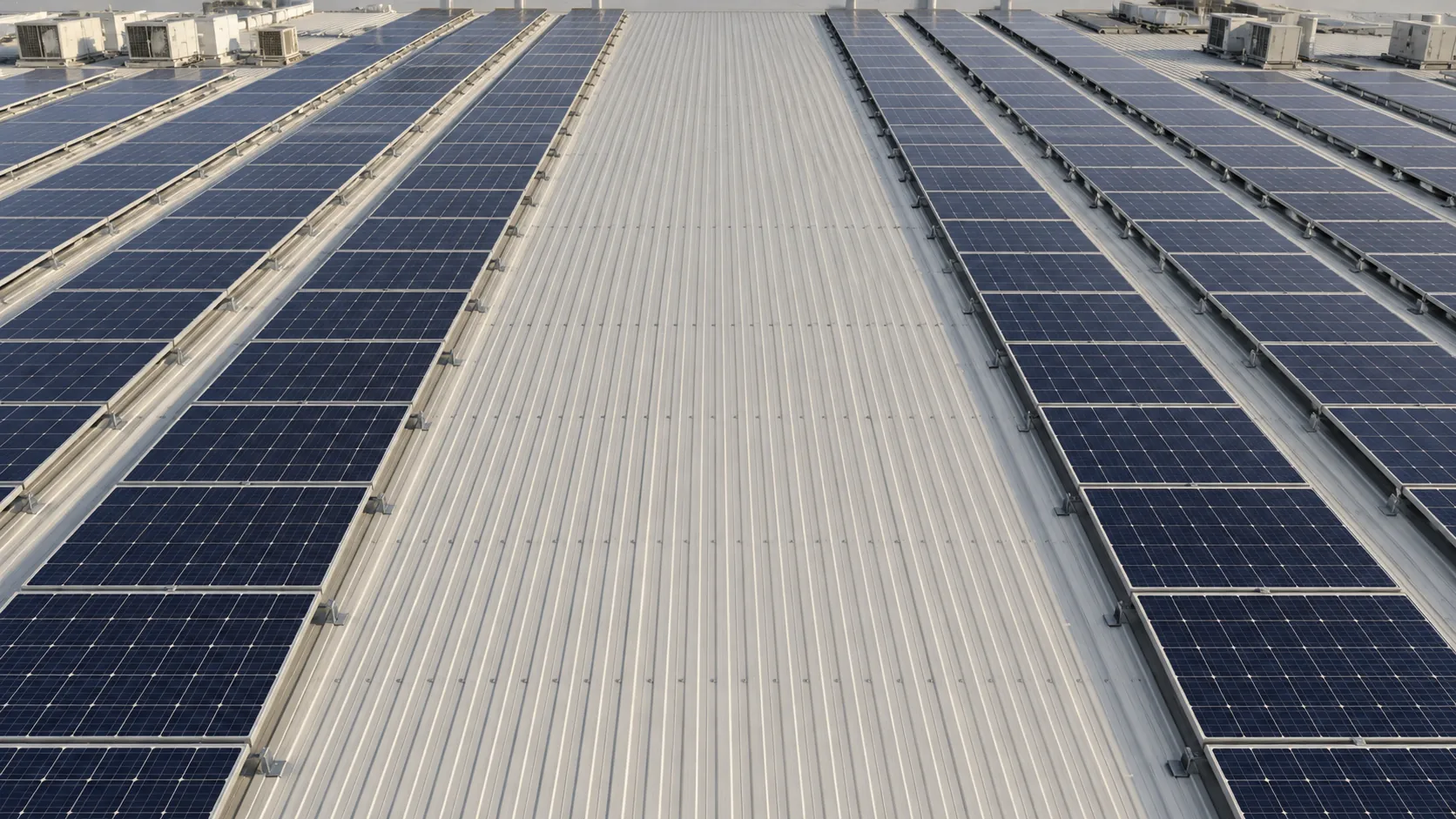
Most farms have four to twelve sheds, often on one or two meters, with long low-pitched roofs that could hold far more panels than the load needs. Three rules keep the design honest.
- Size to the meter's daytime draw, not the roof area. Add up the sheds on each meter and size the system to the midday load in a typical batch week. Every kW above that exports for a few cents, or is curtailed where the line is export-limited.
- Put the panels on the roofs nearest the switchboard. Long cable runs between sheds cost money and lose power. Panels on two or three sheds close to the meter usually beat a thin spread across all of them.
- Check the roof and the air. Shed roofs are long and light, so the structural allowance matters. Dust, feathers and ammonia from the fan outlets settle on panels downwind, so the layout should keep panels away from exhaust ends and the quote should say how often cleaning is needed and what it costs.
A battery can carry solar into the evening fan load, but it competes with a smaller system and a demand-charge saving. See commercial solar batteries for how to test it.
How much will solar save a shed farm?
Here is a worked example with made-up figures. These are example figures, not our prices or a real site. The system, price, output and rates are the ones used on our commercial solar cost page, so the pages can be checked against each other.
A Queensland broiler farm with six sheds on one meter installs 100kW across the two sheds nearest the switchboard. It makes about 145,000 kWh a year at an example price of $73,000 after the STC discount. Fans and pads run all day, so the sheds use about 85% of the solar.
- 123,250 kWh × $0.28 = $34,510, plus 21,750 kWh × $0.05 = $1,088. Yearly saving $35,598.
- At $73,000, that pays back in about 2.1 years.
If the feeder is zero-export, the 15% exported is curtailed instead and the saving is $34,510, which still pays back in about 2.1 years. On a load this steady, the export limit barely moves the answer; it only matters if the system is oversized.
Overnight stays on the bill. If the sheds draw half their power after dark, solar cuts roughly the daytime half and leaves the rest, however big the system. The proposal should show the overnight kWh it cannot touch.
Biosecurity, generators and the install
Two things an installer needs to understand before quoting a shed farm.
- Biosecurity. Installers and their vehicles have to follow the farm's entry rules, usually between batches. The timetable for the install is set by the batch calendar, not the installer's diary. Ask who manages that.
- Standby power. Ventilation failure kills stock within the hour on a hot day, so every shed farm has a generator. Solar does not replace it. A grid-tied system shuts down in a blackout, and only a battery with islanding, which costs more, can keep fans turning. The generator and the solar also have to be set up so they never feed each other; the proposal should say how.
State rules for solar on sheds are the same as for any farm; the state table is on our farms guide. NSW sheds that want to carry solar into the evening can look at the Peak Demand Reduction Scheme battery discount.
What should a shed farm send for a proposal?
Just one recent bill for each meter, every page. Using the NMI on each bill, the team gets that meter's interval data, which shows the fan and pad load hour by hour, the batch cycle and the overnight draw. You don't need to request anything.
Mention these in the form if you know them: the number of sheds per meter, whether heating is gas or electric, the ventilation type, the generator setup and which sheds sit closest to the switchboard.
What to ask your installer
- What daytime load did you size to, and from which weeks of our interval data?
- How much of the overnight load does this leave on the bill?
- Which sheds carry the panels, how long are the cable runs, and has the roof been checked for the extra load?
- How will the system be isolated when the generator runs, and what happens in a blackout?
- What export limit have you assumed, and what does cleaning cost on this site?
Already have a quote for your sheds? Compare it line by line with our checklist and we'll check these points for free. Otherwise send a bill for each meter and an accredited installer prepares a costed proposal sized to how your sheds run. Free, no obligation.