In short
- A supermarket uses almost 100% of the solar it can fit. Refrigeration runs 24 hours and the store trades through every daylight hour.
- The roof, not the load, sets the system size. Most stores could use more panels than they can mount.
- Who owns the roof and the meter decides whether you can do it at all. A standalone store is simple; a tenancy in a centre is a conversation with the landlord first.
Solar pays on almost every supermarket in Australia, because a supermarket is using power in every daylight hour. The refrigeration cases, cool rooms and freezers run around the clock, the lighting and air conditioning run from before opening to after close, and the store is open from early morning to late evening, seven days. A well-sized system is used almost completely on site. The questions that actually decide a supermarket project are the roof, the tenancy and the meter. This page is the supermarket version of our guide to solar for retail.
| Quick facts | Solar for a supermarket |
|---|---|
| Share of solar used on site | typically 95–100% |
| What sets the system size | the usable roof, then the connection |
| What solar cuts | daytime energy; a small share of the demand charge |
| Who has to agree | the roof owner and the meter holder, which may not be you |
| What to send | one recent bill; we get the interval data from it |
Why does a supermarket use all its solar?
Refrigeration is roughly half the power a supermarket uses, and it never stops. On top of it sit lighting, HVAC, bakery and deli equipment, checkouts and the back-of-house cool rooms, all running through trading hours. A typical full-line store draws power steadily from about 6am to 11pm and still carries the refrigeration base overnight.
Panels make power from about 7am to 5pm. Every hour of that sits inside trading hours with the refrigeration underneath it, so there is always a load larger than the panels can make. The store exports almost nothing, which means every kWh is worth the full rate on the bill rather than the $0.05 feed-in credit.
How much will solar save a supermarket?
A worked example with made-up figures. These are example figures, not our prices or a real site.
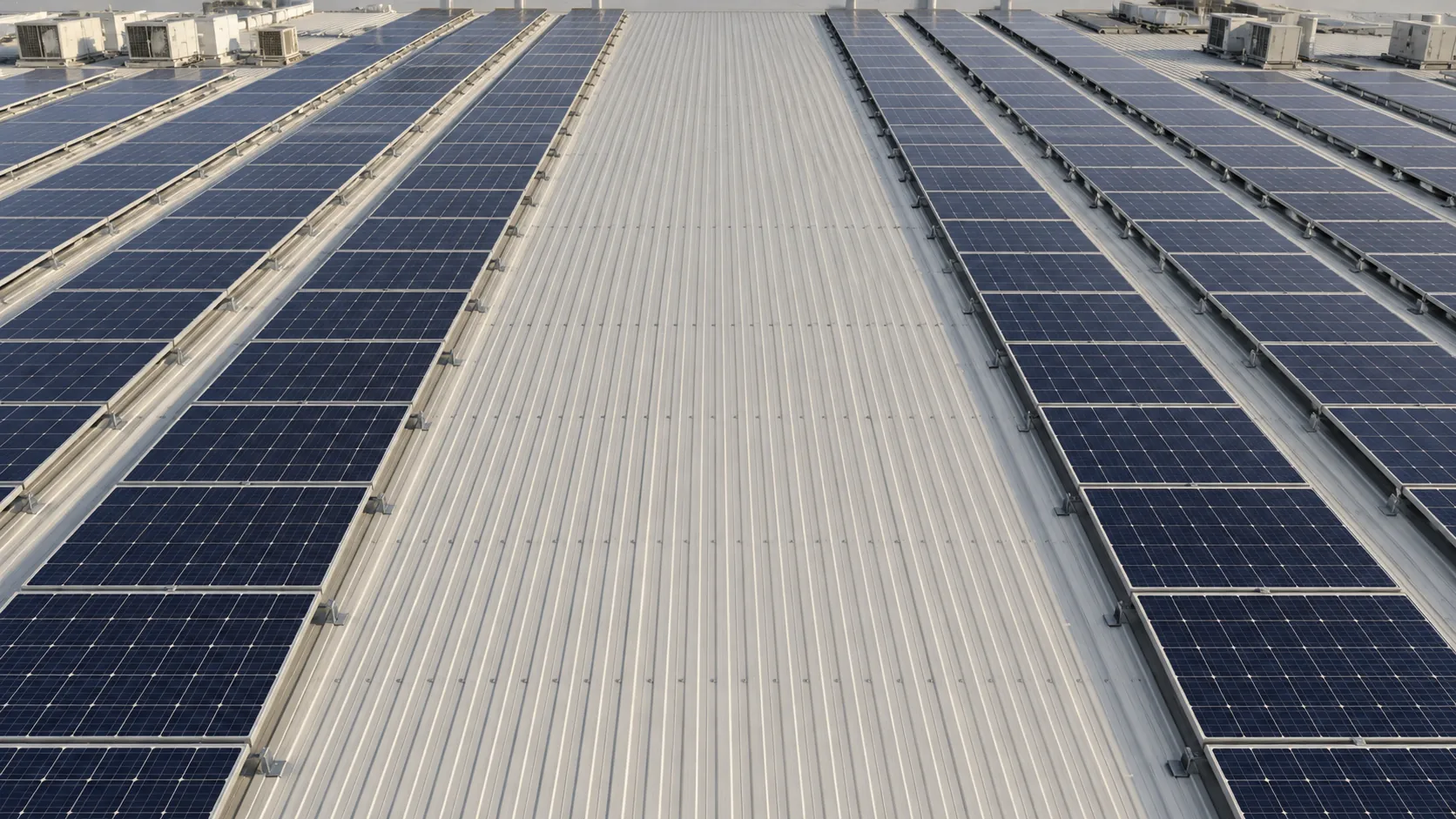
A Brisbane full-line supermarket draws well above 100kW through the day. It fits a 100kW system on the part of the roof clear of plant and skylights, which makes about 145,000 kWh a year.
- The site uses about 98% of the solar itself, because the load never drops below what the panels make.
- 142,100 kWh × $0.28 = $39,788, plus 2,900 kWh × $0.05 = $145. Yearly saving $39,933.
- At an example price of $73,000 after the STC discount, that pays back in about 1.8 years.
A smaller independent store with a 30kW system makes about 43,500 kWh a year and uses all of it: 43,500 kWh × $0.28 = $12,180 a year. Our cost page gives $21,000 to $29,000 after STCs for 30kW, which is a payback of about 1.7 to 2.4 years. Both figures sit at the fast end of the payback-by-site table. Large stores often pay a lower rate per kWh with a demand charge on top, and at $0.20 a kWh the 100kW payback stretches to about 2.6 years.
Why is the roof the limit?
Because the load is so large, almost every supermarket could use more panels than it has roof for. Three things shrink the usable area:
- Plant and skylights. Condensers, exhaust fans, HVAC units and skylights take the middle of the roof, and the panels have to keep clear of them and their service access.
- Roof structure. Older stores were not designed for the extra weight. A structural check is routine and should be in the quote.
- Car park and canopy. Where the roof is full, a car park canopy adds area, at a higher price per kW than a roof.
The practical outcome is that a supermarket system is sized to the roof and then checked against the connection, not sized to the load. There is no oversizing problem here. The export question that worries a warehouse barely applies.
Who has to agree: tenancy, landlords and embedded networks
This is where most supermarket projects stall, and it is worth sorting out before anyone quotes.
- Standalone store, own building. Straightforward. The business owns the roof and holds the meter.
- Standalone store, leased. The landlord owns the roof. Options range from the tenant installing with consent, to the landlord installing and recovering it in rent, to a power purchase agreement where a third party owns the panels. Our page on solar for leased buildings walks through them. The lease term matters: a two-year payback inside a ten-year lease is a different decision from a two-year payback with eighteen months to run.
- Tenancy in a shopping centre. The centre owns the roof, and the store may buy its power through the centre's embedded network rather than from a retailer directly. In that case the store is not the network customer, the panels would connect to the centre's system, and the saving may be shared between centre and tenant under the lease. The rules for embedded networks are set by the Australian Energy Regulator and differ by state. The first call is to the centre's facilities manager, not an installer.
What does each state offer a supermarket?
Nothing specific to supermarkets. The federal STC discount applies everywhere, and since 1 October 2026 it covers eligible systems up to 1MW. Victoria's Victorian Energy Upgrades program gives an upfront discount on business systems from 30kW to 200kW. NSW discounts batteries through the Peak Demand Reduction Scheme. The other states add nothing for solar. The full state table is on the solar for retail page.
What should a supermarket send for a proposal?
Just one recent bill, every page. Using the NMI on it, the team gets your interval data, which shows the refrigeration base, the trading-hours load and your peak. You don't need to request anything. If the store buys power through a centre, send the centre's bill or statement instead and say so in the form.
If you know them, mention these:
- Tenure: own the building, lease it, or a centre tenancy
- Roof: age, plant layout, any recent structural report
- Refrigeration: any planned refit, since new cases change the load
- Trading hours: including any 24-hour trading
Already have a quote? Compare it line by line with our checklist.
What to ask your installer
- What share of the solar do you expect us to use, and is that from our interval data?
- How much usable roof is there after plant, skylights and service access, and has the structure been checked?
- What does the system save at our real rate per kWh, and does it change our demand charge?
- If we lease, what consent do you need from the landlord, and have you done this in a centre before?
- Does the network limit exports, and does it matter for a store that exports almost nothing?
Send a bill and an accredited installer prepares a costed proposal sized to the roof and checked against how the store uses power. It's free, with no obligation.