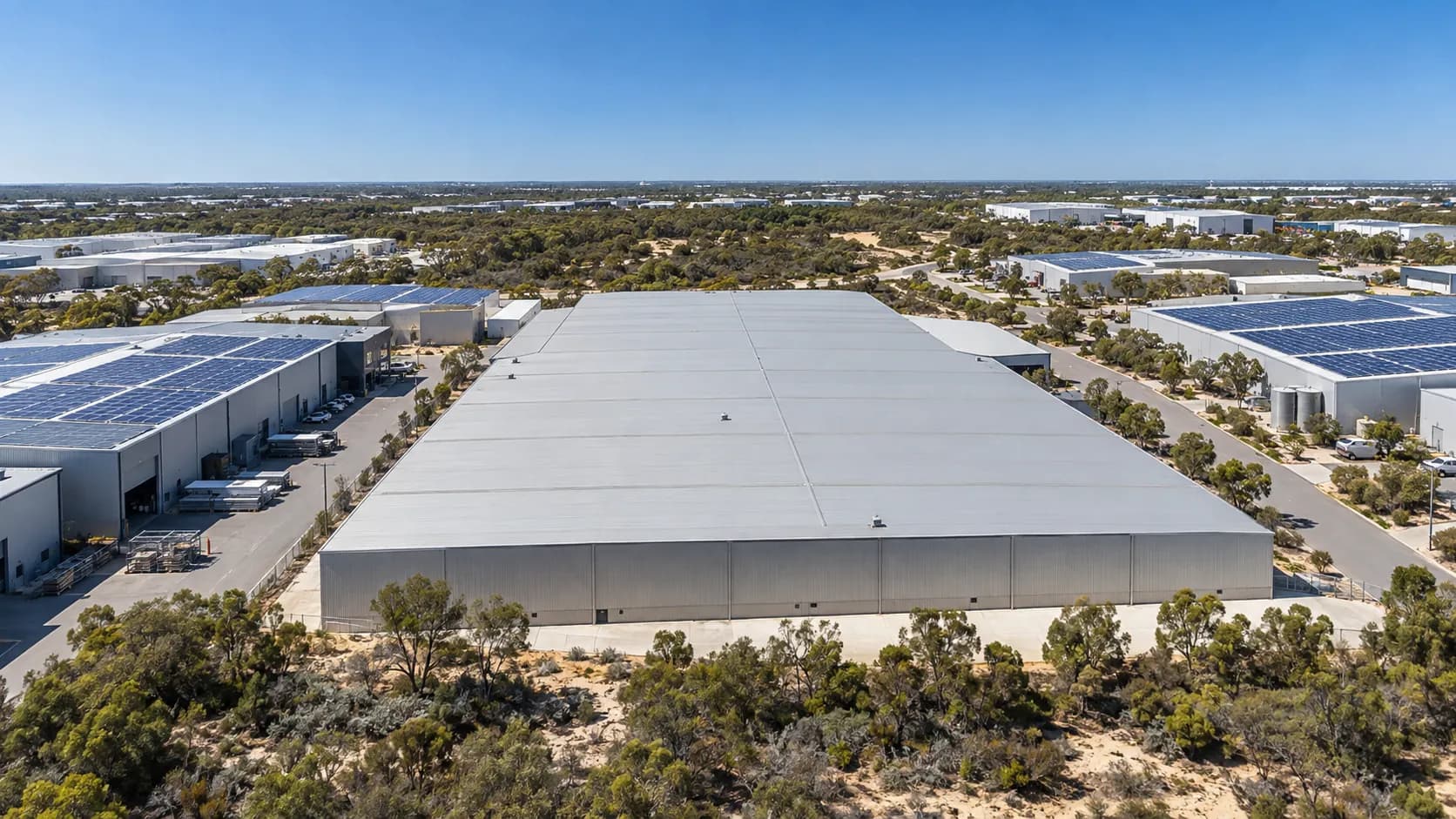
In short
- A Western Australian winery gets the most sun of any on this site, about 1,600 kWh per kW a year around Perth, and earns nothing for exports, so the design is simple: size to the load and use it all.
- Above 30 kVA a system leaves Western Power's basic connection process and goes through a non-standard connection with a technical assessment of the feeder. Most winery systems are above it.
- No state rebate. The federal STC discount is the whole of the upfront support.
Yes, solar pays for most Western Australian wineries in 2026, and the state's two facts pull in opposite directions: the best sun in the country, and no income at all for exports. The buyback scheme covers only small residential, not-for-profit and educational systems, so a business earns whatever its retail contract says, which is usually nothing. A winery's return is the power it stops buying through vintage and the long hot summer. This page covers what changes for a Western Australian site. The general case is on solar for wineries.
| Quick facts | Winery solar in Western Australia |
|---|---|
| Regions | Margaret River, Swan Valley, Great Southern (Mount Barker, Frankland), Geographe, Pemberton |
| Distributor | Western Power on the South West Interconnected System; Horizon Power beyond it |
| STC zone | Zone 3, rating 1.382 for Perth; southern regions to confirm |
| State help | No state rebate; the federal STC discount only |
| Export value | nothing for business under the buyback scheme; size to the load |
| What to send | one recent bill for each meter; we get the interval data from it |
What's different in Western Australia?
1. Western Power's 30 kVA line
Perth, the Swan Valley, Margaret River and the Great Southern all sit on the South West Interconnected System, which Western Power runs on its own. Nothing about the process matches the eastern states.
- Up to 30 kVA: the basic embedded generator connection.
- Above 30 kVA: a non-standard connection, with a technical assessment of the feeder the winery sits on and application fees to match. Expect a longer approval.
- Above 100 kVA: the same non-standard path, with the export agreement doing more of the work.
Margaret River and the Great Southern sit at the far end of long rural feeders, and export limiting is common in constrained parts of the network. A winery can still be worth building with exports capped at zero, because the design below assumes zero anyway. Sites beyond the interconnected system, in Horizon Power's area, have their own rules and hosting limits. The Perth commercial solar page has more.
2. STC zone 3
Perth postcodes sit in STC zone 3, rating 1.382. For a 2026 install the scheme counts five years, so a 100kW system earns 100 × 1.382 × 5 = 691 certificates, rounded down. The Swan Valley shares Perth's zone. Margaret River, Pemberton and the Great Southern need checking against the Clean Energy Regulator's postcode table. Since 1 October 2026 the discount covers eligible systems up to 1MW on a site.
3. No state rebate, and no buyback for business
There is no Western Australian rebate for commercial solar; the federal STC discount is the only upfront reduction. The Distributed Energy Buyback Scheme covers residential, not-for-profit and educational customers with systems of 5kW or less, so a winery gets nothing from it. Any payment for exports comes down to the retail contract, and it is usually small or nothing. Every example on this page counts exports at zero.
4. A hot, dry vintage and a long cooling season
Western Australian vintage runs from late January in the Swan Valley to March and April in Margaret River and the Great Southern. The Swan Valley is one of the hottest wine regions in the country, and its refrigeration load through vintage and summer is heavy. Margaret River is milder but sunny, and its cellar door and restaurant trade runs strongly year round. Barrel hall cooling runs for much of the year in both.
Across twelve months, 65 to 75% self-use is a reasonable planning figure for a Western Australian winery with a cellar door and year-round cooling, a little higher than the eastern states because the summer is longer. Vineyard pumps are usually on their own meter and sized separately, as on our irrigation page.
A worked example for a Western Australian winery
Here is a worked example with made-up figures. These are example figures, not our prices or a real site. The price is the one our commercial solar cost page uses for a 100kW system.
- A 100kW system in the Swan Valley, assumed to make about 1,600 kWh per kW a year, the Perth city page's figure, so about 160,000 kWh a year.
- The winery uses about 65% of that itself across the year, 104,000 kWh. 56,000 kWh goes to the grid.
- At $0.28 for each kWh the site no longer buys: 104,000 × $0.28 = $29,120. Exports are counted at $0, because a Western Australian business earns nothing under the buyback scheme.
- Yearly saving $29,120. At an example price of $73,000 after the STC discount, that pays back in about 2.5 years.
The 56,000 kWh exported for nothing is the number to fix. A system sized to the summer and vintage daytime load rather than the roof, perhaps 65 to 75kW on this example site, lifts self-use above 80%, costs less, and pays back faster. In Western Australia more than anywhere, the biggest system is rarely the best one. The proposal should show two sizes with the sums.
What to send
Just one recent electricity bill for each meter, every page. Using the meter number on it, we get your interval data, which shows the vintage peak, the summer cooling load and the winter trough. You don't need to request anything from your retailer.
If you know them, mention the refrigeration capacity, whether there is a cellar door or restaurant, and whether the vineyard pumps are on the same meter. Send a bill and an accredited installer prepares a costed proposal sized to how your winery uses power. Already have a quote? Compare it line by line with our checklist, starting with whether it counts any income for exports.