In short
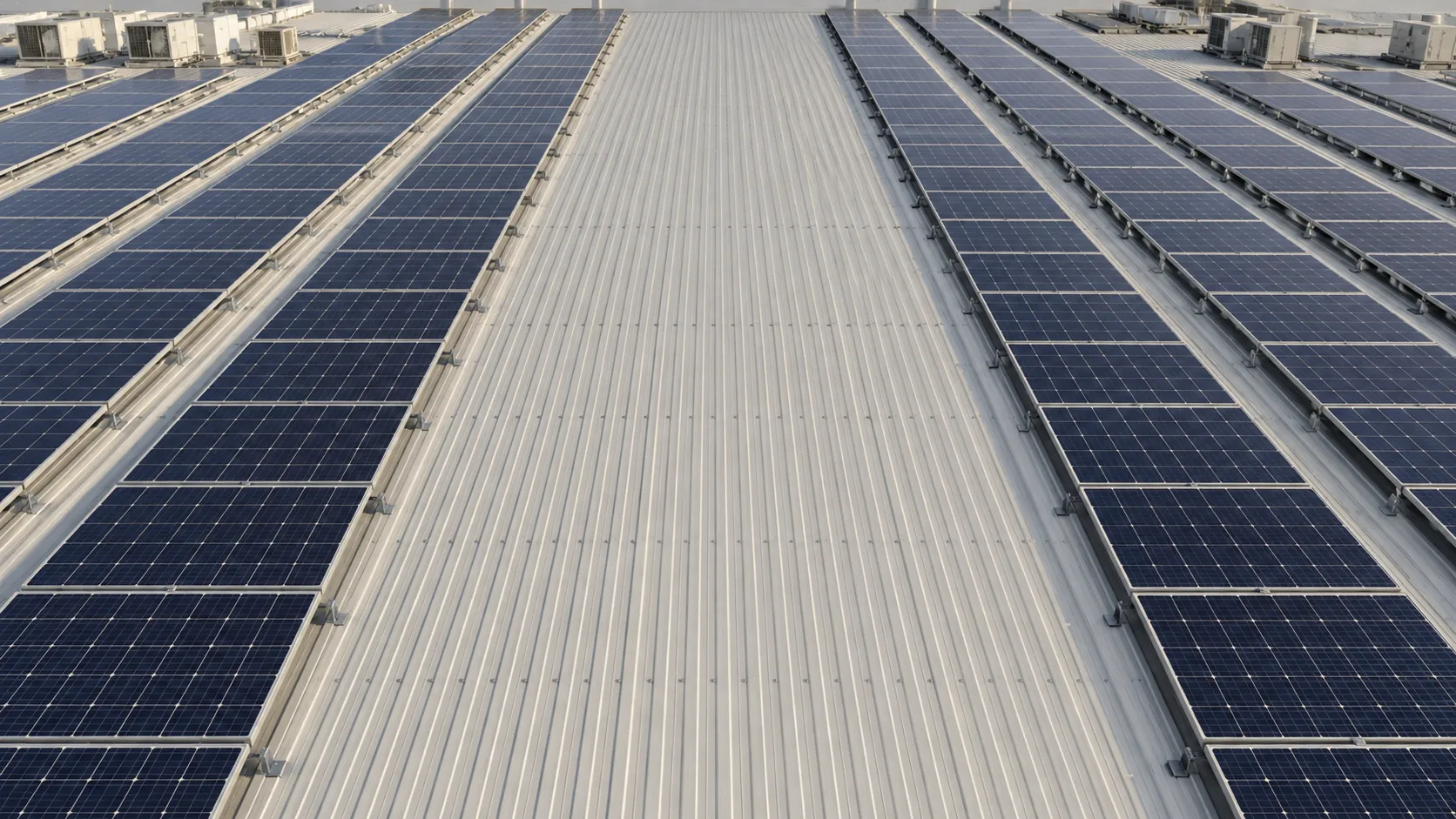
- A 100kW system is about 180 panels on 500 to 620 m² of roof.
- It usually needs network approval, and the network may limit what you send back.
- From 1 October 2026, bigger systems can also get the upfront discount.
A 100kW system suits a bigger site that uses a lot of power in daylight hours. It usually needs approval from the power network, and the network often limits how much you can send back to the grid. So its value depends heavily on how much power your site uses during the day.
| Quick facts | 100kW system |
|---|---|
| Roof space | 500 to 620 m² |
| Number of panels | about 180 |
| Power made per year | about 160,600 kWh (Perth estimate) |
| Power made per day | about 440 kWh on average |
| Suits | a cold store, food processor, school campus or multi-tenancy estate with steady daytime use |
Is 100kW right for my site?
- A cold store runs its compressors day and night, and works hardest on hot afternoons when the sun is strongest. It can use most of a 100kW system's power.
- A food processor running day shifts, with fridges, compressed air and process heat, is similar. Weekends and shutdowns cut into it.
- A school campus uses power in teaching hours but little on weekends and holidays. It usually sits between the two payback cases below.
- A multi-tenancy estate raises a different question: who uses the power? Solar on a shared roof helps most when it can feed tenants directly, so sort that out before sizing.
If 100kW looks too big for how much power you use, compare it with a 50kW system.
How much power does a 100kW system make?
kW is system size, like a car's top speed; kWh is power made over time, like distance driven. We use the Australian Government's YourHome guide, which puts average output in Perth at about 4.4 kWh a day for each kW of panels. So 100kW makes about 440 kWh a day on average, or about 160,600 kWh a year (about 1,606 kWh per kW a year). Sites further south, such as Melbourne, make less.
On a roof this size, area is not the only limit. How much weight the roof can carry, walkways for access and gaps from the edges often decide the layout too.
What approval does a 100kW system need?
A 100kW system usually goes through the power network's process for larger systems. Each network has its own rules, but these points are common.
- The installer lodges the application. Build the wait into your plan.
- Assume the network may limit how much power you send back, until it says otherwise.
- The network may ask for extra safety equipment or studies, which add cost.
At this size, a tight limit on sending power back is a real possibility. A controller then holds the system back to stay within it.
A 100kW system usually has two or more inverters (the boxes that turn the panels' power into power your building can use). That keeps power flowing if one unit fails.
What changes on 1 October 2026?
The upfront government discount comes from small-scale technology certificates, or STCs. Your system earns these, and the installer usually claims them and takes their value off your price.
Before 1 October 2026, 100kW is the largest system that can get STCs upfront. Bigger systems fall into the large-scale scheme, earning certificates over time as they make power. That is why business systems were often capped at 100kW, however much power the site used.
New federal rules made on 16 September 2026 change this. Systems above 100kW and up to 1MW (1,000kW) installed from 1 October 2026 can get STCs. The main points:
- The 1MW limit counts all solar on the site, including systems already there.
- Systems from 100kW to 1MW get 5 years counted, for each year of install up to 2030.
- Applications will not open until mid to late November 2026.
Say your site could use 130kW or 150kW. For installs from 1 October, you no longer need to cap it at 100kW to keep the upfront discount. Full detail is in STCs for business and the 1MW change.
How many STCs does a 100kW system get?
The number of certificates is worked out like this:
kW of panels × your area's rating × years counted
The Clean Energy Regulator sets your area's rating, based on how much power each kW of panels makes there. A 100kW system installed in 2026 gets 5 years counted.
In Perth, Brisbane, Sydney and Adelaide (zone 3), the rating is 1.382. So 100 × 1.382 × 5 = 691 STCs. In Melbourne (zone 4) the rating is 1.185, which gives 592.5, rounded down to 592.
The certificate price moves, so read the STC line on your quote. In Victoria, a state program called VEU also offers an upfront discount on systems between 30 and 200 kW. See commercial solar rebates.
How long will it take to pay for itself?
CSQ does not publish prices. The per-kW figures are example quote prices used for the sums, not CSQ prices or a quote.
What we assumed:
- Power made: 100 kW × 4.4 kWh × 365 days = 160,600 kWh a year
- Each kWh you use yourself saves $0.28 you would have paid for grid power
- Each kWh you send back to the grid earns a $0.05 credit
If you use 80% of the solar yourself (cold store, food processor): 128,480 kWh × $0.28 = $35,974. Add 32,120 kWh sent back × $0.05 = $1,606. Yearly saving $37,580.
If you use 40% of the solar yourself: 64,240 kWh × $0.28 = $17,987. Add 96,360 kWh sent back × $0.05 = $4,818. Yearly saving $22,805.
| Your quote per kW (after the STC discount) | Total price | Yearly saving if you use 80% | Years to pay back | Yearly saving if you use 40% | Years to pay back |
|---|---|---|---|---|---|
| $700 per kW | $70,000 | $37,580 | 1.9 years | $22,805 | 3.1 years |
| $900 per kW | $90,000 | $37,580 | 2.4 years | $22,805 | 3.9 years |
| $1,100 per kW | $110,000 | $37,580 | 2.9 years | $22,805 | 4.8 years |
In plain words: using most of your solar yourself pays the system off much sooner.
What if you can send nothing back? Then the spare power is simply lost, and so is the credit. At 80% use, the yearly saving is $35,974, and payback is 1.9, 2.5 and 3.1 years across the three rows. At 40% use, it is $17,987, and payback is 3.9, 5.0 and 6.1 years.
A site that uses little of its solar and cannot send the rest back is where 100kW is hardest to justify. A smaller system or a battery deserves a look. See commercial solar cost for the wider picture.
What about a battery? For a cold store using most of its solar, it rarely pays for power alone. It can help a site with spare power it cannot send back. It can also help with high demand charges (a fee based on your busiest moment of the month). The battery guide and demand charges guide show how to test it.
What to ask your installer
- Does my system size need a special network approval, and are there fees?
- Will the network limit how much power I can send back, and by how much?
- Will the network want extra safety equipment or studies, and what will they cost?
- If I install from 1 October 2026, would a system over 100kW suit my site better?
- Does any existing solar on my site count towards the 1MW limit?
With the 100kW ceiling gone for new installs, size is about your site, not the rules. Your bill is the place to start. Send a bill and an accredited installer prepares a costed proposal for your site. It is free, with no obligation.