In short
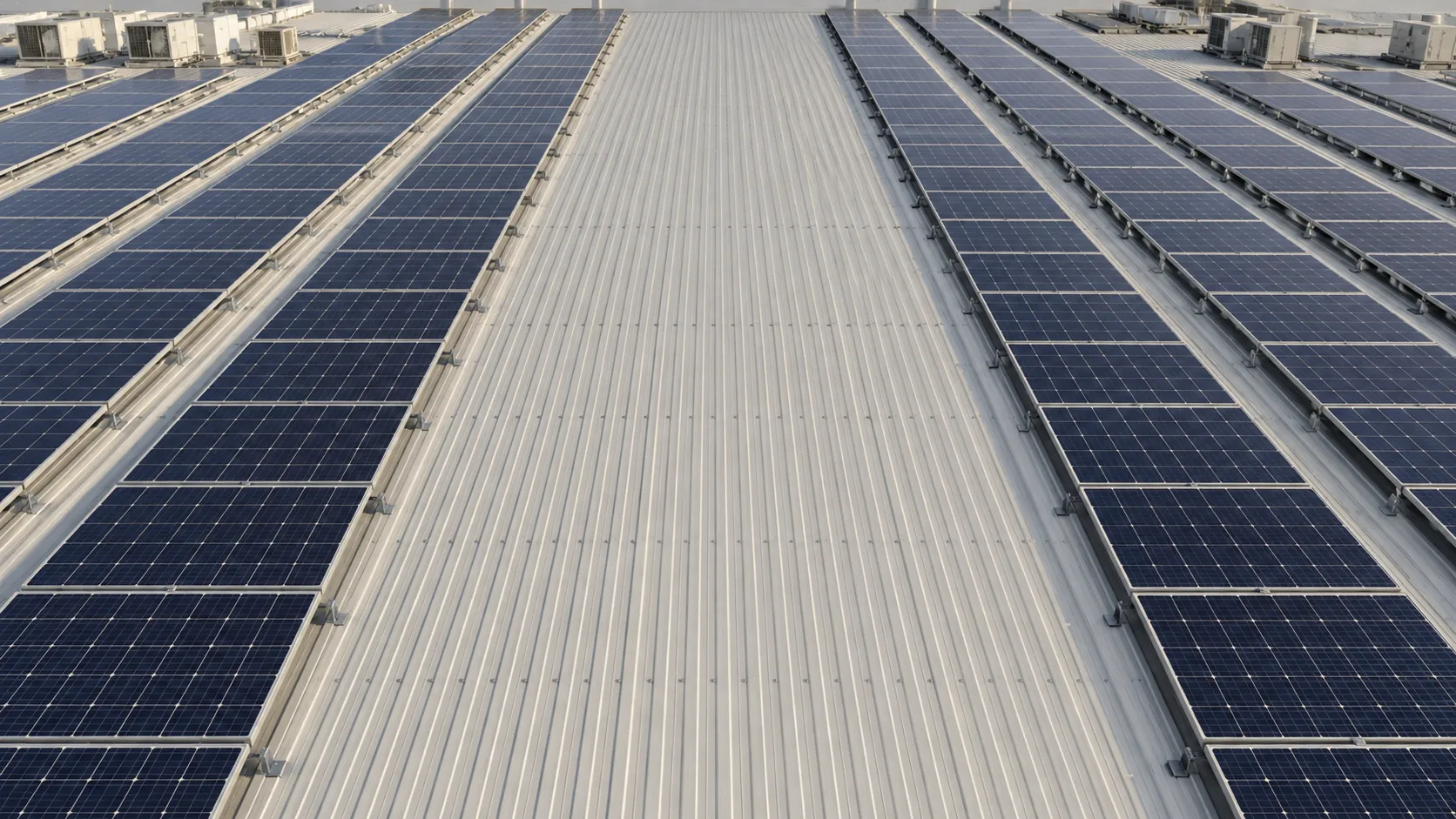
- A 50kW system is about 90 panels on 250 to 320 m² of roof.
- In Melbourne it makes about 180 kWh of power a day, on average.
- When your business is open matters more to payback than the price you pay.
50kW is the size many mid-sized businesses end up weighing up. Whether it pays off in two years or six depends mostly on how much of the power you use yourself. That comes down to your hours: a business busy in daylight does far better than one busy at night.
| Quick facts | 50kW system |
|---|---|
| Roof space | 250 to 320 m² |
| Number of panels | about 90 |
| Power made per year | about 65,700 kWh (Melbourne estimate) |
| Power made per day | about 180 kWh on average |
| Suits | a mid-size distribution centre, supermarket or large clubhouse |
Why do so many businesses choose 50kW?
Most businesses compare it with something smaller, or with something twice as big. But two businesses can buy the same 50kW system and get very different results. The difference is when they use power.
- A distribution centre running one or two day shifts uses lighting, office power and forklifts on charge. That lines up closely with when the sun shines, so it uses most of the solar itself.
- A supermarket runs its fridges day and night, with extra cooling on hot afternoons. That steady use soaks up the solar reliably, even on weekends.
- A clubhouse is often quiet until late afternoon and busiest at night. Much of the midday power would go back to the grid, unless the design or a battery shifts it.
The first two use about 80% of their solar, like the first case in the payback table below. The clubhouse is closer to 40%. That alone can nearly double the time it takes to pay the system off.
How much power does a 50kW system make?
kW is the size of the system, like a car's top speed. kWh is the power it makes over time, like distance driven.
We use the Australian Government's YourHome guide, which puts average output in Melbourne at about 3.6 kWh a day for each kW of panels. So 50kW makes about 180 kWh a day on average, or about 65,700 kWh a year (about 1,314 kWh per kW a year).
Melbourne gets less sun than the northern capitals, so the same system makes less power there. On the same guide, Perth makes about 4.4 kWh a day per kW, against about 3.6 in Melbourne. On a roof of 250 m² or more, the panels are often split across two or more roof faces. Panels facing east and west spread the power across more of the working day.
Will solar cut my demand charges?
Many businesses big enough for 50kW pay a demand charge. That is a monthly fee based on the most power you draw at once in a short window, not on the total you use. Think of it as being billed for your single busiest moment of the month.
Our payback table leaves demand charges out. Solar reliably cuts how much grid power you buy, but not your busiest moment.
A passing cloud at 3pm on the hottest day can still set the month's peak. If your peak is early morning or evening, solar does not touch it at all.
So treat any demand saving in a proposal as a bonus that your detailed meter data must back up. The demand charges guide explains how they work, and when a battery is the better tool for cutting them.
Does a 50kW system need network approval?
Usually, yes. At 50kW you are past the point where many power networks switch from a simple approval to a more detailed one. Expect the installer to apply to the network, and allow time for it.
The network may also limit how much power you can send back to the grid. If it does, the system is set to hold back its output when your site cannot use it. That is one more reason your daytime use matters.
The system will usually have one large inverter (the box that turns the panels' power into power your building can use), or two smaller ones. Two cost a little more, but part of the system keeps running if one fails.
How much does the government discount take off?
The federal discount comes from small-scale technology certificates, or STCs. Your system earns these, and the installer usually claims them and takes their value off your price.
The number of certificates is worked out like this:
kW of panels × your area's rating × years counted
Your area's rating is set by the Clean Energy Regulator, based on how much power each kW of panels makes where you are. For systems installed in 2026, the scheme counts 5 years. That drops by one each year until 2030.
In Melbourne (zone 4), the rating is 1.185. So 50 × 1.185 × 5 = 296.25, rounded down to 296 STCs. In Sydney, Brisbane, Adelaide and Perth (zone 3) the rating is 1.382, which gives 345.
Certificate prices move, so check the discount line on your quote. Victorian businesses may also qualify for a state discount called VEU, which covers systems between 30 and 200 kW. See commercial solar rebates.
How long will it take to pay for itself?
CSQ does not publish prices. The per-kW figures below are example quote prices used for the sums, not CSQ prices or a quote.
What we assumed:
- Power made: 50 kW × 3.6 kWh × 365 days = 65,700 kWh a year
- Each kWh you use yourself saves $0.28 you would have paid for grid power
- Each kWh you send back to the grid earns a $0.05 credit
- Demand charges: not included
If you use 80% of the solar yourself (distribution centre, supermarket): 52,560 kWh × $0.28 = $14,717. Add 13,140 kWh sent back × $0.05 = $657. Yearly saving $15,374.
If you use 40% of the solar yourself (clubhouse busy at night): 26,280 kWh × $0.28 = $7,358. Add 39,420 kWh sent back × $0.05 = $1,971. Yearly saving $9,329.
| Your quote per kW (after the STC discount) | Total price | Yearly saving if you use 80% | Years to pay back | Yearly saving if you use 40% | Years to pay back |
|---|---|---|---|---|---|
| $700 per kW | $35,000 | $15,374 | 2.3 years | $9,329 | 3.8 years |
| $900 per kW | $45,000 | $15,374 | 2.9 years | $9,329 | 4.8 years |
| $1,100 per kW | $55,000 | $15,374 | 3.6 years | $9,329 | 5.9 years |
In plain words: at the same price, a business open in daylight pays the system off much sooner than one open at night.
At 40%, a 50kW system sends 39,420 kWh a year back to the grid for about $1,971. That is a good reason to ask whether a smaller 30kW system would do nearly as well for less. More on costs at commercial solar cost.
What about a battery? For the distribution centre or supermarket, it adds little. For the clubhouse, a battery can store midday power for the evening, and it may also help with demand charges. It is a separate sum with its own costs. See commercial solar batteries.
What to ask your installer
- Does my system size need a special network approval, and are there fees?
- How long will the approval take, and who lodges it?
- Will the network limit how much power I can send back to the grid?
- One inverter or two, and why?
- Is any demand charge saving backed up by my meter data?
- Is the STC discount shown as its own line on the quote?
At the same price, the same 50kW system can pay off in 2.9 years or 4.8 years. Your bill shows which one you are closer to. Send a bill and an accredited installer prepares a costed proposal sized to how you use power. It is free, with no obligation.