In short
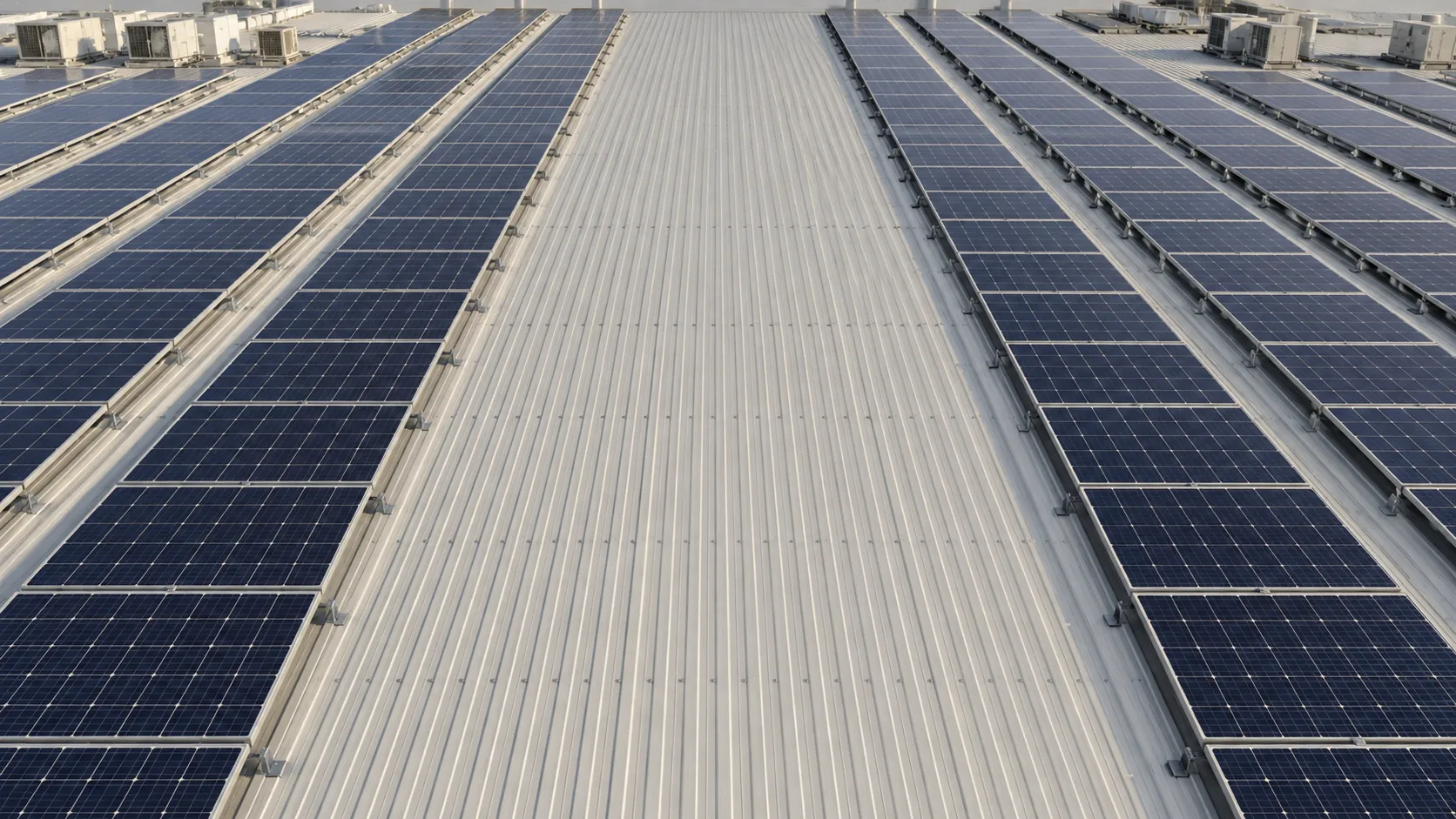
- A 30kW system is about 54 panels on 150 to 190 m² of roof.
- In Sydney it makes about 120 kWh of power a day, on average.
- It pays off fastest when your business uses most of that power during the day.
A 30kW system is the usual starting size for business solar. It is big enough if your business uses well over 120 kWh a day, mostly in daylight hours. For a business like that, the system often pays for itself in two to five and a half years.
| Quick facts | 30kW system |
|---|---|
| Roof space | 150 to 190 m² |
| Number of panels | about 54 |
| Power made per year | about 43,800 kWh (Sydney estimate) |
| Power made per day | about 120 kWh on average |
| Suits | a single warehouse, small factory shed or childcare centre with steady daytime use |
Is 30kW big enough for my business?
A quick way to tell is to hold the system up against your power bill. Say your business uses well over 120 kWh a day, mostly between about 9am and 4pm. Then your business will use almost all of the solar power itself. That is where the value is.
Now say you use about 120 kWh a day or less, or use much of it at night. Then a lot of the power goes back to the grid. You get only a small credit for it. In that case a smaller system or a battery may make more sense.
At this size, being too small is rarely the problem. The more common mistake is sizing the system to fit the roof, rather than to fit how much power you use.
If your bill shows you would use more than a 30kW system makes, compare it with a 50kW system. For a general overview, see commercial solar.
How much power does a 30kW system make?
It helps to know two terms. kW is the size of the system, a bit like a car's top speed. kWh is the amount of power it makes over time, like the distance you drive.
We use the Australian Government's YourHome guide, which puts average output in Sydney at about 4.0 kWh a day for each kW of panels. So 30kW makes about 120 kWh a day on average, or about 43,800 kWh a year (about 1,460 kWh per kW a year).
Sites further south, such as Melbourne, make less. Which way your roof faces, how steep it is and any shade will change the real number more than your city does.
Will it work on my power supply?
Most businesses looking at 30kW already have three-phase power (the heavier-duty supply most factories and warehouses have). They will need it. Power networks set their limits for single-phase power (the normal household supply) at household scale.
If your site is single-phase, the proposal should say whether you need a supply upgrade, and what it costs. That cost can change whether a system this size is worth it.
On a three-phase site, a 30kW system usually has one inverter (the box that turns the panels' power into power your building can use). The panels often add up to a little more than the inverter's rating. The proposal should show both figures.
30kW also sits right on the line where several power networks switch to a more detailed approval process. Keeping the inverter at or just under that line can keep the paperwork simpler. A slightly smaller inverter often costs you little in lost power.
How much does the government discount take off?
The federal discount comes from small-scale technology certificates, or STCs. Your system earns these certificates, and the installer usually claims them and takes their value off your price.
The number of certificates is worked out like this:
kW of panels × your area's rating × years counted
Your area's rating is set by the Clean Energy Regulator. It is based on how much power each kW of panels makes where you are. For a system installed in 2026, the scheme counts 5 years. That drops by one each year until the scheme ends in 2030.
In Sydney, Brisbane, Adelaide and Perth (zone 3), the rating is 1.382. So 30 × 1.382 × 5 = 207.3, which gives 207 STCs. In Melbourne (zone 4) the rating is 1.185, so the same system earns 177.
The dollar value moves with the certificate price on the day. So read the STC line on your quote rather than assuming a figure.
In Victoria, a state program called VEU also offers an upfront discount on business systems between 30 and 200 kW. Check with the provider that your system qualifies. There is more on both at commercial solar rebates.
How long will it take to pay for itself?
CSQ does not publish prices. The three prices below are example quote prices used for the sums, not CSQ prices or a quote. Find the row closest to your own quote, after the STC discount.
What we assumed:
- Power made: 30 kW × 4.0 kWh × 365 days = 43,800 kWh a year
- Each kWh you use yourself saves $0.28 you would have paid for grid power
- Each kWh you send back to the grid earns a $0.05 credit
If you use 80% of the solar yourself (busy in the day): 35,040 kWh × $0.28 = $9,811. Add 8,760 kWh sent back × $0.05 = $438. Yearly saving $10,249.
If you use 40% of the solar yourself (busier in the evening): 17,520 kWh × $0.28 = $4,906. Add 26,280 kWh sent back × $0.05 = $1,314. Yearly saving $6,220.
| Your quote per kW (after the STC discount) | Total price | Yearly saving if you use 80% | Years to pay back | Yearly saving if you use 40% | Years to pay back |
|---|---|---|---|---|---|
| $700 per kW | $21,000 | $10,249 | 2.0 years | $6,220 | 3.4 years |
| $900 per kW | $27,000 | $10,249 | 2.6 years | $6,220 | 4.3 years |
| $1,100 per kW | $33,000 | $10,249 | 3.2 years | $6,220 | 5.3 years |
In plain words: a business that uses most of its solar pays the system off much sooner than one that sends most of it back.
These are simple sums. They leave out panels wearing slowly, price changes, loan costs and upkeep, so use them to compare, not to predict. Notice that how much solar you use yourself moves the answer more than the price does. For the wider picture, see commercial solar cost.
Should I add a battery to a 30kW system?
If your business is busiest during the day, usually not yet. You already use almost all the solar power.
A childcare centre or small business that is busy late in the afternoon and evening is different. A battery can store some of the spare midday power for those hours. Whether it pays depends on the gap between what you pay for grid power and what you get for sending it back. See commercial solar batteries.
What to ask your installer
- Is my site three-phase, and if not, what would a supply upgrade cost?
- Does my system size need a special network approval, and are there fees?
- Will the network limit how much power I can send back to the grid?
- Would a slightly smaller inverter keep the approval simpler?
- Is the STC discount shown as its own line on the quote?
- In Victoria: does my system qualify for the VEU discount?
How much solar you use yourself decides payback more than price. That depends on when your business uses power, and only your bill shows it. Send a bill and an accredited installer prepares a costed proposal sized to how you actually use power. It is free, with no obligation.