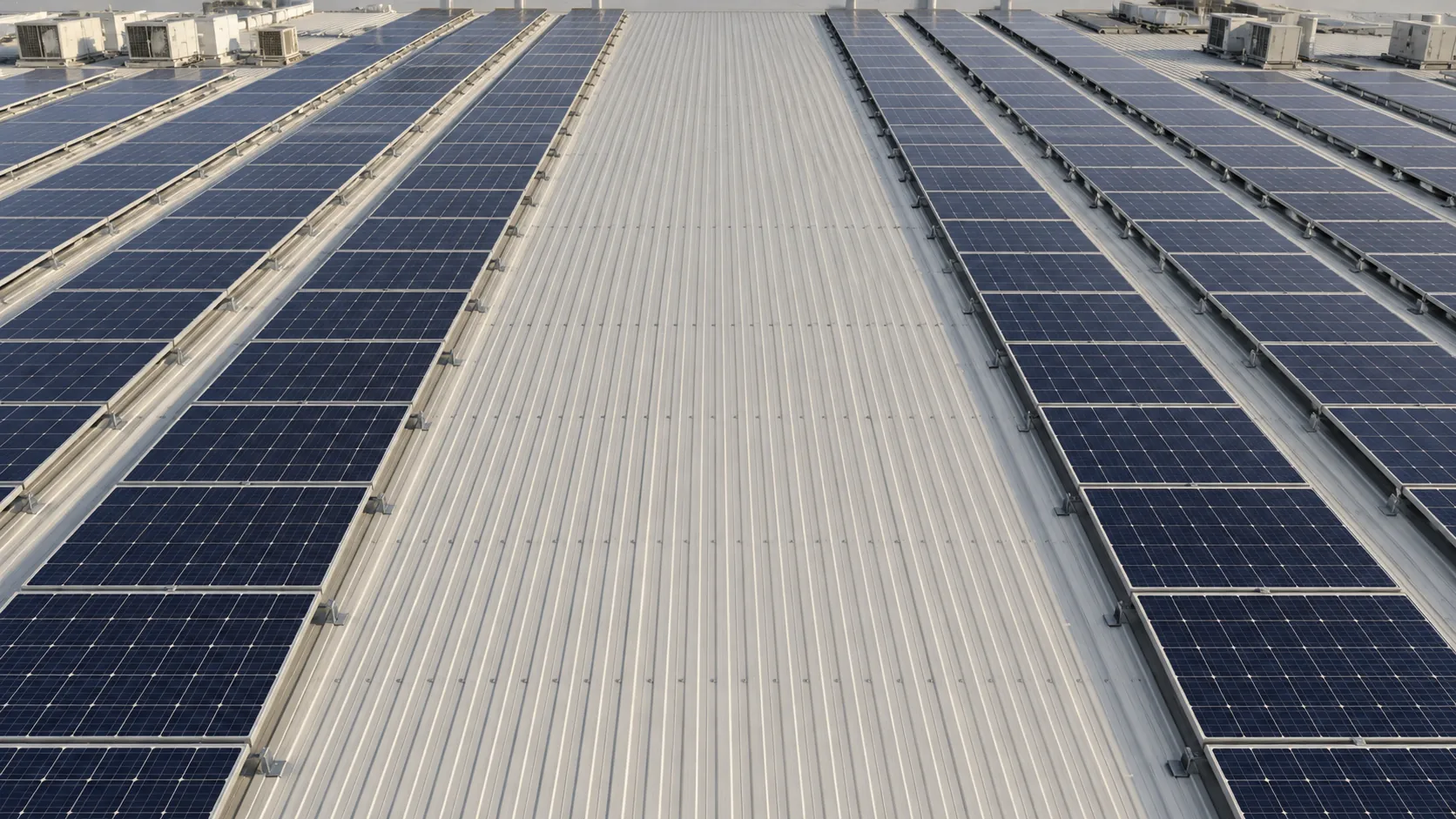
In short
- Payback on a factory depends mostly on shifts: a 24/7 site uses almost all its solar, a weekday day-shift site sends weekend power to the grid.
- In our Brisbane example, a 100kW system pays back in about 2.0 to 2.5 years across those shift patterns.
- From 1 October 2026, systems between 100kW and 1MW can take the upfront STC discount, which suits larger factory roofs.
For most Australian manufacturers, commercial solar pays back in two to four years, and the shift pattern decides where you land. A factory busy in daylight uses most of what the panels make. One closed at weekends sends two days in seven to the grid for a small credit. This guide shows the sums for each pattern, what changes above 100kW, and what each state adds.
| Quick facts | Solar for a manufacturing site |
|---|---|
| Typical size | 100kW to 1MW, depending on load and roof |
| Payback in our example | about 2.0 to 2.5 years at 100kW |
| Biggest factor | how much of the solar the site uses itself |
| Over 100kW | STCs or REGO certificates, from 1 October 2026 |
| What to send | one recent bill; we get the interval data from it |
What payback should a manufacturer expect?
Here is a worked example with made-up figures. These are example figures, not our prices or a real site.
A 100kW system in Brisbane makes about 145,000 kWh a year. Each kWh the factory uses itself saves $0.28. Each kWh sent to the grid earns $0.05. The example price is $73,000 after the STC discount.
| Shift pattern | Solar used on site | Yearly saving | Years to pay back |
|---|---|---|---|
| Runs 24/7 | 90% | $37,265 | 2.0 |
| Two shifts, six days a week | 80% | $33,930 | 2.2 |
| One weekday day shift, closed weekends | 65% | $28,928 | 2.5 |
| Mostly evening or night work | 40% | $20,590 | 3.5 |
In plain words: the more of the day and week your machines run, the more of the solar you use, and the sooner it pays.
A weekday-only factory can close the gap with a slightly smaller system, or by moving a flexible load, such as a compressor top-up, a chiller or a batch process, into the middle of the day. These sums leave out demand charges, panels wearing slowly and price changes. The same table for other site types is on commercial solar cost.
Can solar cut a factory's demand charge?
Sometimes, but don't count on it. A demand charge is set by your busiest half-hour in the month. Many factories set it at start-up, around 6am, when motors, compressors and lighting come on together. Solar is weak at that hour.
If your peak falls in the middle of a sunny day, solar may lower it. If it falls at start-up, a battery or a staggered start does more. Your interval data shows when it happens. Ask for any demand charge saving on its own line. See demand charges.
What changes for systems over 100kW?
Since 1 October 2026, an eligible system between 100kW and 1MW can create STCs, the upfront federal discount that used to stop at 100kW. That makes larger factory roofs worth a fresh look.
- A system between 100kW and 1MW chooses one path: STCs, taken upfront with a fixed 5-year deeming period, or REGO certificates, created over time for each MWh. It can't take both for the same years.
- The 1MW limit counts everything on the site, not just the new panels.
- Applications open mid to late November 2026, so a system installed in October waits a few weeks for its certificates.
See STCs or REGO for 100kW to 1MW systems and the 100kW guide.
What about tax?
From 1 July 2026, small businesses with turnover under $10 million can write off eligible assets costing under $20,000 each in full. Most factory systems cost more than that, so they won't qualify. An asset costing $20,000 or more can go into the small business pool, depreciated at 15% in the first year and 30% each year after. Larger businesses use the general depreciation rules. Ask your accountant how this applies to you.
What does each state offer a manufacturer?
| State | What matters for a factory |
|---|---|
| NSW | No rebate on solar panels. The Peak Demand Reduction Scheme gives businesses an upfront discount on batteries from 20 kWh to 30 MWh, larger when new solar goes in within 90 days. Worth testing if your demand charge is high. |
| VIC | The one state with a commercial solar incentive. Victorian Energy Upgrades gives an upfront discount on systems between 30kW and 200kW, through an accredited provider. Above 200kW, its project-based activities apply. |
| QLD | No state rebate for commercial solar. Feed-in credits in the south-east are set by retailers. |
| SA | No state government rebate; some councils run their own. Export value is especially weak, so size the system to what the factory uses. |
| WA | No state rebate for business solar, and the buyback scheme doesn't cover commercial systems. The return comes from self-use. |
| ACT | No solar rebate. The Sustainable Business Program co-funds energy efficiency upgrades up to $10,000. Solar isn't a listed item. |
We haven't checked Tasmania or the Northern Territory yet. Full detail and dates are on commercial solar rebates.
Will my factory's power supply and roof suit solar?
- Supply. Factories are almost always three-phase. Above 30 kVA, several networks use a more detailed approval process, and larger systems may need extra protection equipment. The proposal should say who applies, how long it takes and any fees.
- Export limits. Many networks limit how much a large system can send back. On a weekday-only site, that matters at weekends.
- Roof. Check the roof's age and condition first. On an older roof, find out whether it contains asbestos before any work is planned. Replacing a roof after the panels go on costs far more than before.
What should a manufacturer send for a proposal?
Just one recent bill, every page. Using the NMI on it, the team gets your interval data, which shows your shift patterns, start-up peaks and weekend load. You don't need to request anything.
If you know of changes coming, such as new lines, extra shifts or gas equipment moving to electric, mention them in the form. They change the size.
What to ask your installer
- How much of the solar will we use, based on our interval data, on weekdays and at weekends?
- Is any demand charge saving shown on its own line, and when does our peak happen?
- Over 100kW: have you priced STCs or REGO, and why that one?
- Does our network limit exports, and who handles the approval?
- Has the roof been checked, including for asbestos if it's older?
Shift pattern decides payback more than price, and the interval data we get from your bill shows it. Send a bill and an accredited installer prepares a costed proposal sized to how your factory uses power. It's free, with no obligation.