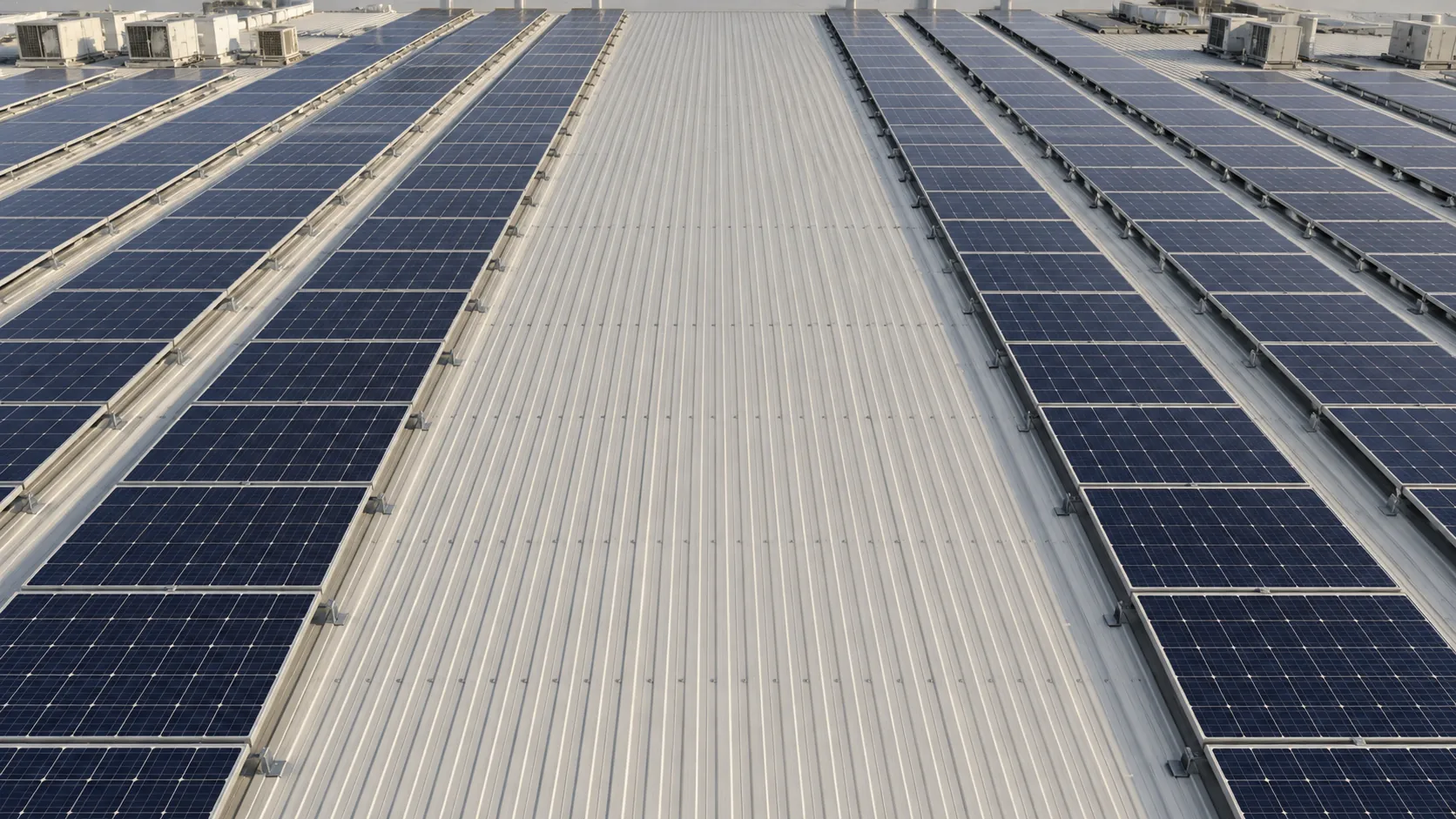
In short
- A plant running extrusion or moulding around the clock uses nearly all its solar. In our example a 100kW system pays back in about 1.9 years.
- Solar only cuts the daytime third of a 24-hour bill. The night shift stays on grid power, whatever size goes on the roof.
- Since 1 October 2026 a 200kW to 500kW system takes the upfront STC discount, which makes a full-roof system worth pricing.
A plastics or packaging plant that runs three shifts is one of the best fits for commercial solar in Australia, and also one of the easiest to misquote. Extruders, injection moulders, chillers and granulators run continuously, so almost every kWh the panels make is used on site. That gives a short payback. It also means solar covers only the daylight part of a 24-hour bill, and a quote that implies more is wrong. This page goes deeper than our manufacturing guide on continuous-process plants: the self-use share, the right size for a large roof, and what changed for systems over 100kW.
| Quick facts | Solar for a plastics or packaging plant |
|---|---|
| Typical size | 100kW to 500kW, often roof-limited rather than load-limited |
| Share of solar used on site | about 95% on a 24/7 plant in our example |
| Payback in our example | about 1.9 years at 100kW |
| Part of the bill solar can't touch | the night shift and the fixed daily charge |
| What to send | one recent bill; we get the interval data from it |
Why does a continuous plant use so much of its solar?
An injection moulding plant draws a steady, heavy load: barrel heaters, hydraulic or servo drives, mould temperature controllers, chillers and dryers. An extrusion line is the same. A corrugated or flexible packaging plant adds compressors, presses and drying ovens. None of it stops at 5pm. On a Sunday the load might drop while a line is down for a mould change, but a plant that sells capacity runs the weekend too.
Against that load, a 100kW system is small. Its midday output is fully absorbed, so almost nothing is exported. The plant uses the solar at $0.28 instead of selling it at $0.05, every day of the year. That is why the payback is short, and why the size question is about the roof and the network connection rather than the load.
What's a realistic payback for a 24/7 plastics plant?
Here is a worked example with made-up figures. These are example figures, not our prices or a real site.
A Brisbane plant puts in a 100kW system, which makes about 145,000 kWh a year. It uses about 95% on site, with the rest exported during a Sunday changeover. Each kWh used saves $0.28; each kWh exported earns $0.05. The example price is $73,000 after the STC discount.
- 137,750 kWh × $0.28 = $38,570, plus 7,250 kWh × $0.05 = $363. Yearly saving $38,933.
- $73,000 ÷ $38,933 = about 1.9 years to pay back.
That compares with about 2.0 years for the 24/7 row on the manufacturing payback table and 2.5 for a day-shift factory. On a plant drawing, say, 600 kW through the day, 100kW of solar covers about a sixth of the daytime load. Solar in this case is a hedge on part of the bill, not a path off the grid.
How big should the system be on a continuous plant?
As big as the roof, the switchboard and the network allow, up to the point where midday output exceeds the daytime load. On a 24/7 plant that point is usually well past 100kW, which is why these plants were held back by the old 100kW STC ceiling.
Since 1 October 2026 an eligible system between 100kW and 1MW can create STCs, the upfront discount. The cost page lists the planning figures: about 1,250 to 1,550 m² of roof and 450 panels at 250kW; 2,500 to 3,100 m² and 900 panels at 500kW. No dollar figure is published for those sizes, because above 100kW the connection, the switchboard and the structural allowance drive the price more than the panel count.
Three rules for the larger system:
- STCs or REGO certificates, not both. A system in this range chooses the upfront STC discount with a five-year deeming period, or REGO certificates created over time. For a plant that wants the discount off the invoice, STCs are the usual answer. See STCs or REGO for a 100kW to 1MW system.
- The 1MW limit counts everything on the site, including an older system already on the roof.
- Applications were expected to open mid to late November 2026, so an October install waits a few weeks for its certificates.
Above 30 kVA most networks move to a more detailed connection assessment, and a system of several hundred kW may need extra protection equipment and an agreed export limit. On a 24/7 plant the export limit rarely bites, because there is little to export.
Where does the night shift leave the sums?
Untouched. A plant that draws the same 600 kW at 2am as at 2pm pays for the night at full grid rates no matter what is on the roof. A battery big enough to shift a night shift onto solar would need to store hundreds of kWh a day, and the spare daytime solar to fill it does not exist on a plant that already uses 95% of its output. The honest battery test for this plant is the demand charge, not the night: see commercial solar batteries and demand charges explained. New South Wales gives an upfront discount on business batteries through the Peak Demand Reduction Scheme, which is worth testing on a plant with a sharp start-up peak.
What does each state add for a plastics plant?
The federal STC discount is the main support everywhere. Victoria is the one state with a solar incentive that applies: Victorian Energy Upgrades gives an upfront discount on systems between 30kW and 200kW, and its project-based activities apply above 200kW. The full state table is on the manufacturing guide.
What should a plastics plant send for a proposal?
Just one recent electricity bill, every page. Using the meter number on it, our team gets your interval data, which shows the daytime load the system should be sized to, the weekend pattern and the half-hour that sets your demand charge. There is nothing to request from your retailer.
Already have a quote? Compare it line by line with our checklist. Otherwise send the bill.
What should a continuous plant ask an installer?
- What is the daytime load the system is sized to, and where does midday output start to exceed it?
- Is the quote on the STC path or the REGO path, and is the certificate count shown?
- What export limit does the network impose at this size, and does the output model apply it?
- Is any night-time saving claimed? If so, from what?
- What is priced for the switchboard, protection and structural work, and what is "subject to inspection"?